
25 Cozy Kitchen Ideas
25 Cozy Kitchen Ideas
Some kitchens feel like showrooms. Others feel like home. The difference usually comes down to warmth, in the materials, the lighting, the small details you notice only after you’ve lingered a while with your coffee. A cozy kitchen doesn’t require a full renovation. Sometimes it’s a wood shelf, a warmer bulb, or a stack of linen towels in just the right tone. Below are 25 ideas, from quick styling swaps to bigger investments, to help your kitchen feel less like a workspace and more like the heart of your home.
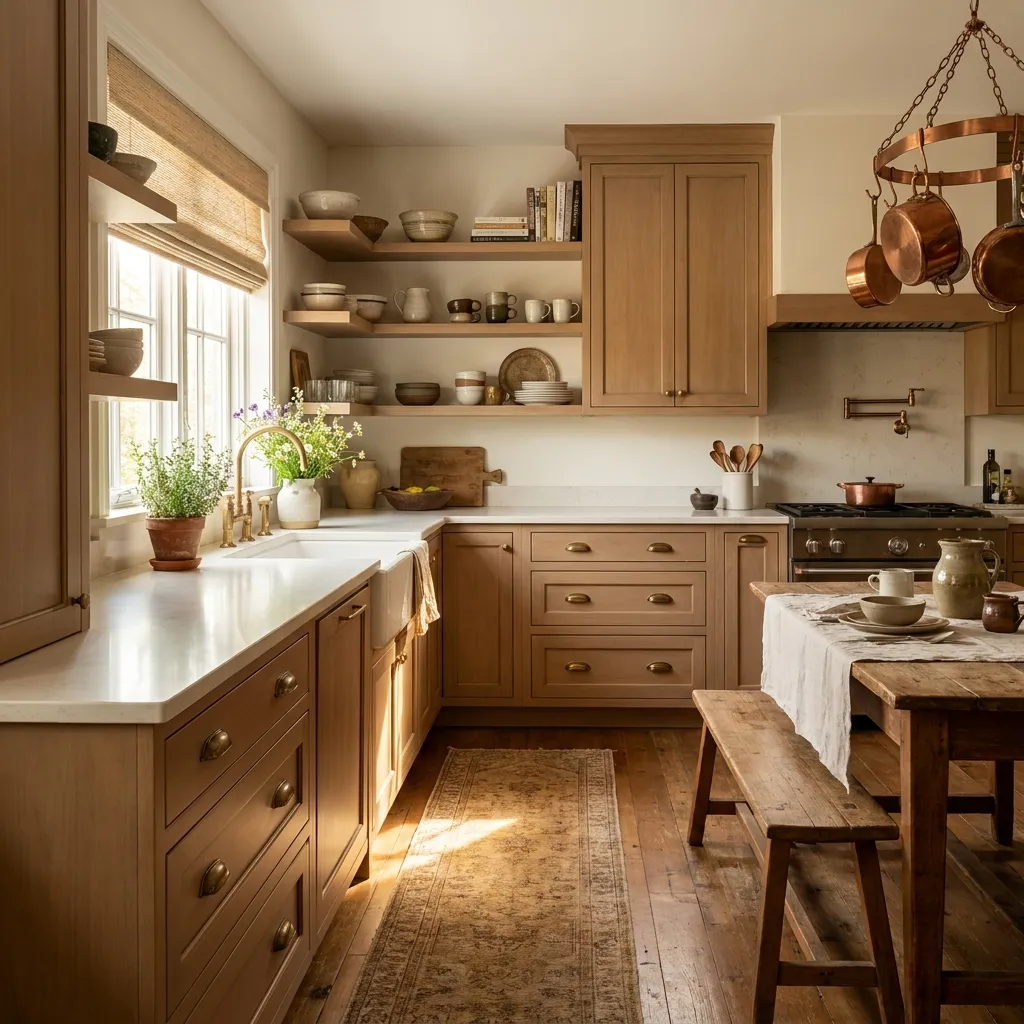
1. Warm Wood Cabinets
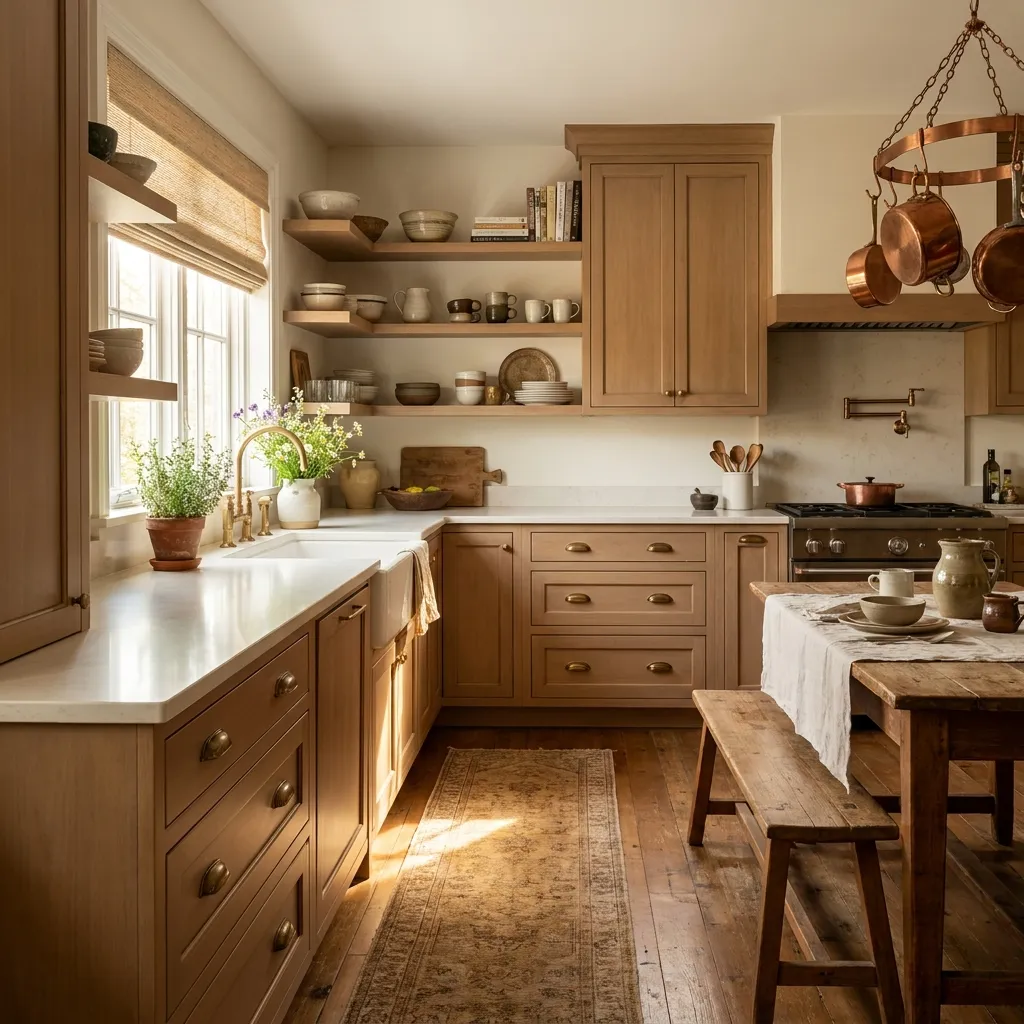
- Wood cabinets bring instant warmth without feeling outdated.
- Brass or matte black hardware adds a subtle upgrade.
- Open shelving mixed with closed cabinets keeps the look balanced.
- Works well in both small and large kitchens.
Wood cabinets instantly make a kitchen feel warmer and more lived-in. Instead of cold, all-white surfaces, warm wood tones add texture and depth that catch the light beautifully throughout the day. A cozy kitchen doesn’t need heavy renovation to feel inviting — sometimes swapping cabinet fronts or refinishing existing ones in a honey or walnut tone is enough to transform the entire room. Pairing wood with lighter countertops keeps the space from feeling too dark, while brass or black hardware adds a small detail that ties the whole look together. It’s a simple shift with a noticeably bigger impact.
Kitchens with wood cabinetry age well because the material only gets richer with time. Unlike painted finishes that can chip or yellow, natural or stained wood develops a warm patina that adds character rather than wear. Cozy kitchen ideas often lean on materials like this because they feel timeless instead of trendy, which matters if you’re not planning to redo the space again soon. Wood also pairs effortlessly with other warm elements — woven baskets, ceramic dishware, or a butcher block island — making it easy to build a cohesive, welcoming kitchen without overthinking every design choice.
Also read: 21 Luxury Living Room Design Ideas
2. Soft Ambient Lighting
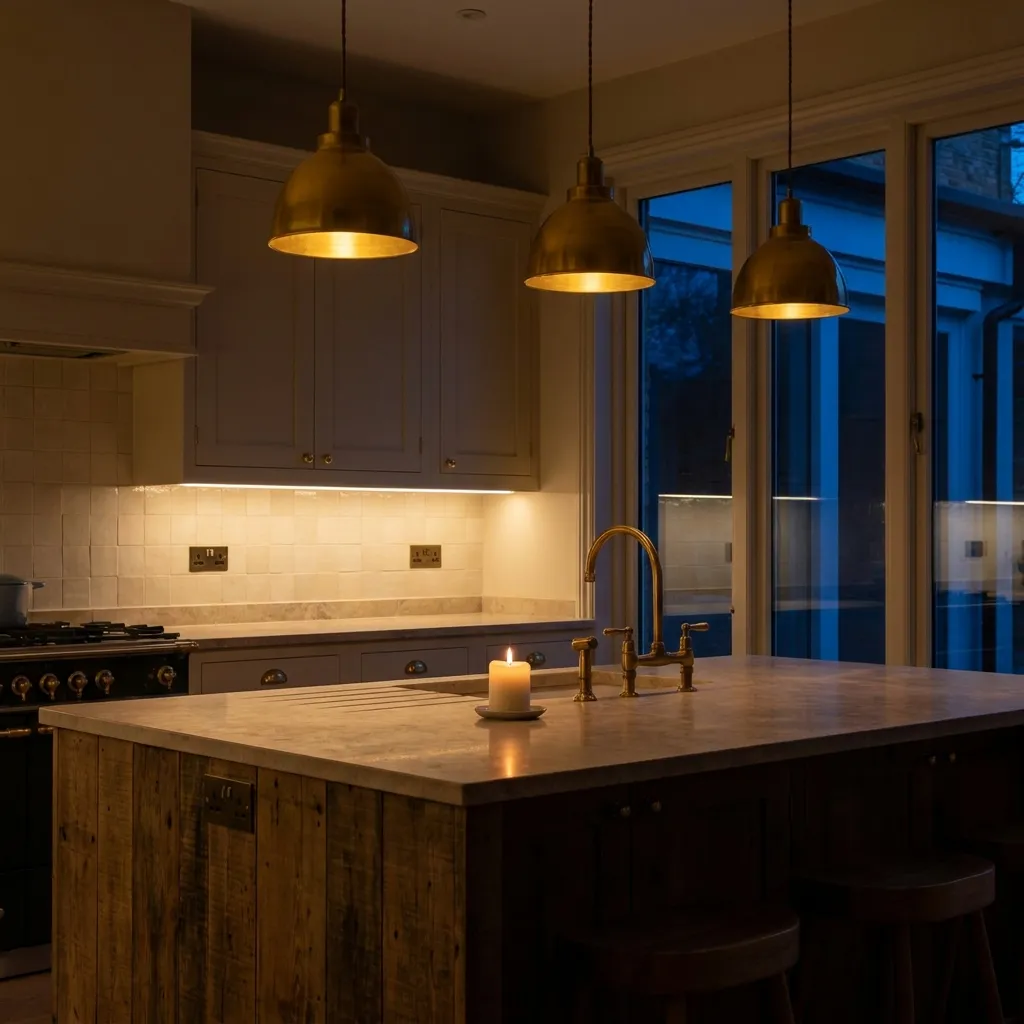
- Warm lighting instantly softens a kitchen’s overall feel.
- Layering pendant, under-cabinet, and task lighting adds depth.
- Dimmable bulbs let you shift the mood from bright to relaxed.
- Small details like candles or nightlights add extra charm in the evening.
Lighting changes everything in a kitchen, often more than paint color or furniture ever could. Bright, cool overhead lights can make even a beautifully designed kitchen feel clinical and uninviting. Switching to warmer bulbs, layering pendant lights over an island, and adding under-cabinet strips creates a softer glow that feels comforting rather than harsh. In my experience, this one change alone makes the biggest difference in how a kitchen feels at night. Warmth here depends heavily on how light falls across surfaces, so paying attention to placement matters just as much as fixture style.
Dimmable lighting gives a kitchen flexibility that fixed brightness never can. Bright light works well for cooking and cleaning, but softer, warmer settings are better suited for slow mornings or quiet evenings at the counter. Adding a few small lighting layers — like a lamp on open shelving or a lit candle near the sink — brings a homey touch that feels personal rather than staged. These small adjustments don’t require an electrician or major renovation, just a willingness to rethink how and when different lights are used. The result is a space that feels warm any time of day.
3. Vintage Farmhouse Sink
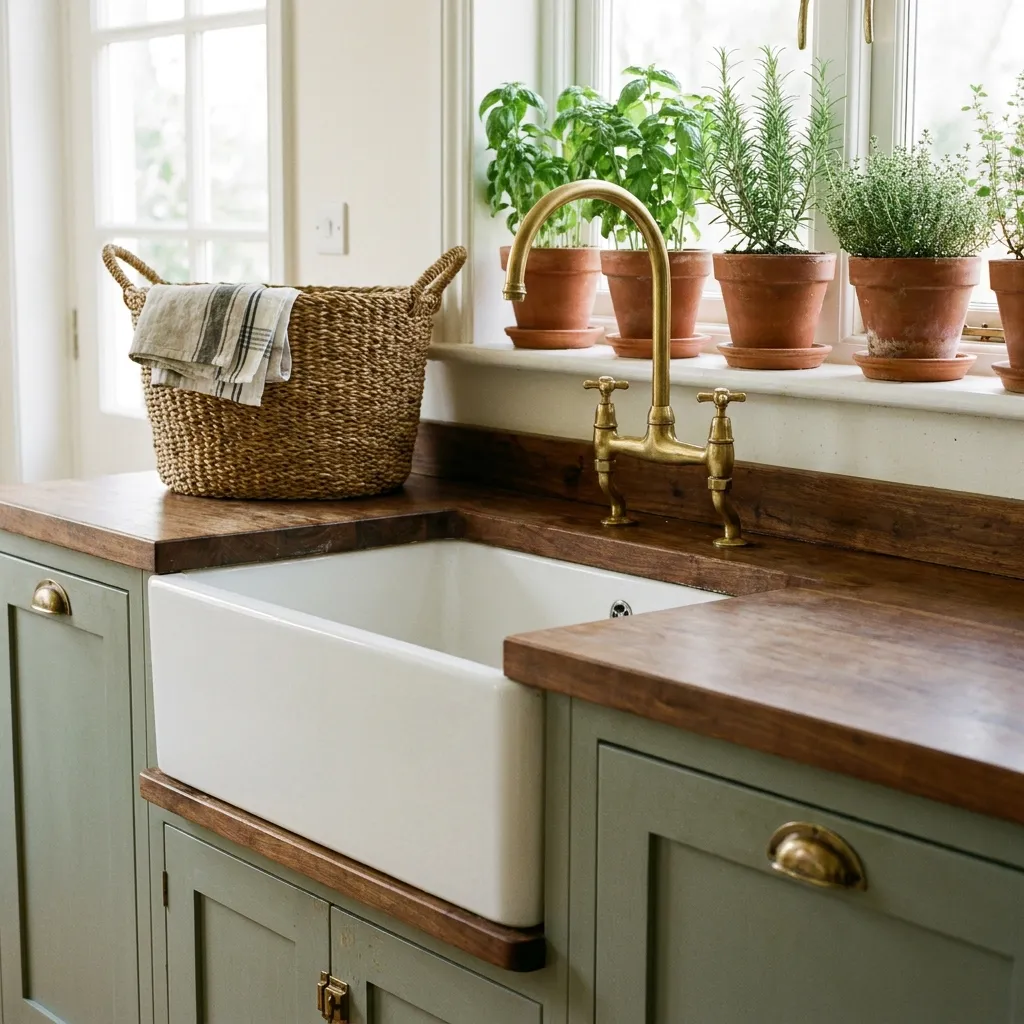
- A farmhouse sink adds instant character and vintage charm.
- The deep basin makes everyday tasks like washing dishes more practical.
- Pairing it with a brass faucet elevates the overall look.
- Works beautifully with both modern and traditional kitchen styles.
A farmhouse sink brings old-world charm into a kitchen without feeling forced or overly styled. Its deep basin isn’t just decorative — it’s genuinely useful for washing large pots, bathing produce, or handling everyday cleanup with more ease than a standard sink allows. The exposed apron front adds a visual anchor to the whole room, drawing the eye and grounding the space in a way that feels intentional. Many homeowners choose this upgrade specifically because it blends practicality with personality, giving the kitchen a focal point that never goes out of style, regardless of changing design trends around it.
I’ve noticed that farmhouse sinks work especially well in kitchens that mix textures, like wood countertops, woven baskets, or open shelving. The contrast between the smooth white basin and warmer, more rustic materials nearby creates a balanced, welcoming look rather than something too sterile or too busy. It’s a detail that photographs beautifully, which is part of why it remains a popular choice for anyone designing with both style and everyday function in mind. Even in smaller kitchens, a farmhouse sink can become the standout feature, making the whole space feel more considered and less like an afterthought.
4. Open Wood Shelving
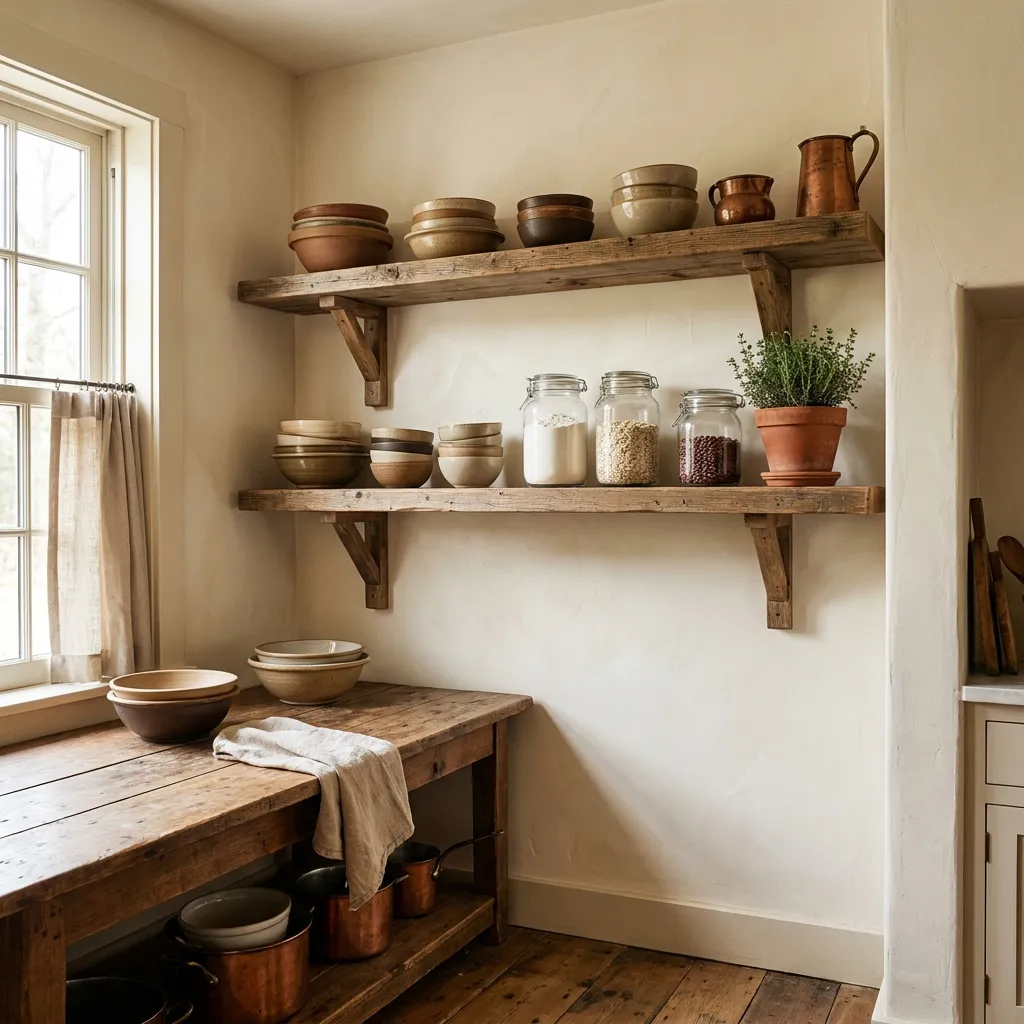
- Open shelving keeps everyday items visible and easy to reach.
- Styling with ceramics and greenery adds warmth without clutter.
- Great for smaller kitchens where closed cabinets feel heavy.
- Encourages a curated, lived-in look rather than a showroom feel.
Open shelving works because it invites you to actually use and display the things you already own, rather than hiding them behind closed doors. A few stacked bowls, a row of glass jars, or a small trailing plant can turn empty wall space into one of the most charming parts of the kitchen. It also naturally encourages a bit of everyday tidiness, since everything on display is visible. This kind of openness feels more approachable than a kitchen where every surface is boxed in behind matching cabinet doors, and it gives the room a sense of being genuinely lived in.
I’ve noticed that open shelves work best when they’re not overfilled. Leaving a little breathing room between items lets each piece stand out instead of blending into visual noise. Mixing textures — a wooden cutting board leaning upright, ceramic mugs, a woven basket — creates depth without needing to buy anything new. This idea also pairs well with warm wood tones or muted wall colors, since the shelving itself becomes part of the room’s overall color story. It’s a low-cost way to add personality, especially in kitchens where cabinet space feels limited or dated.
5. Textured Tile Backsplash
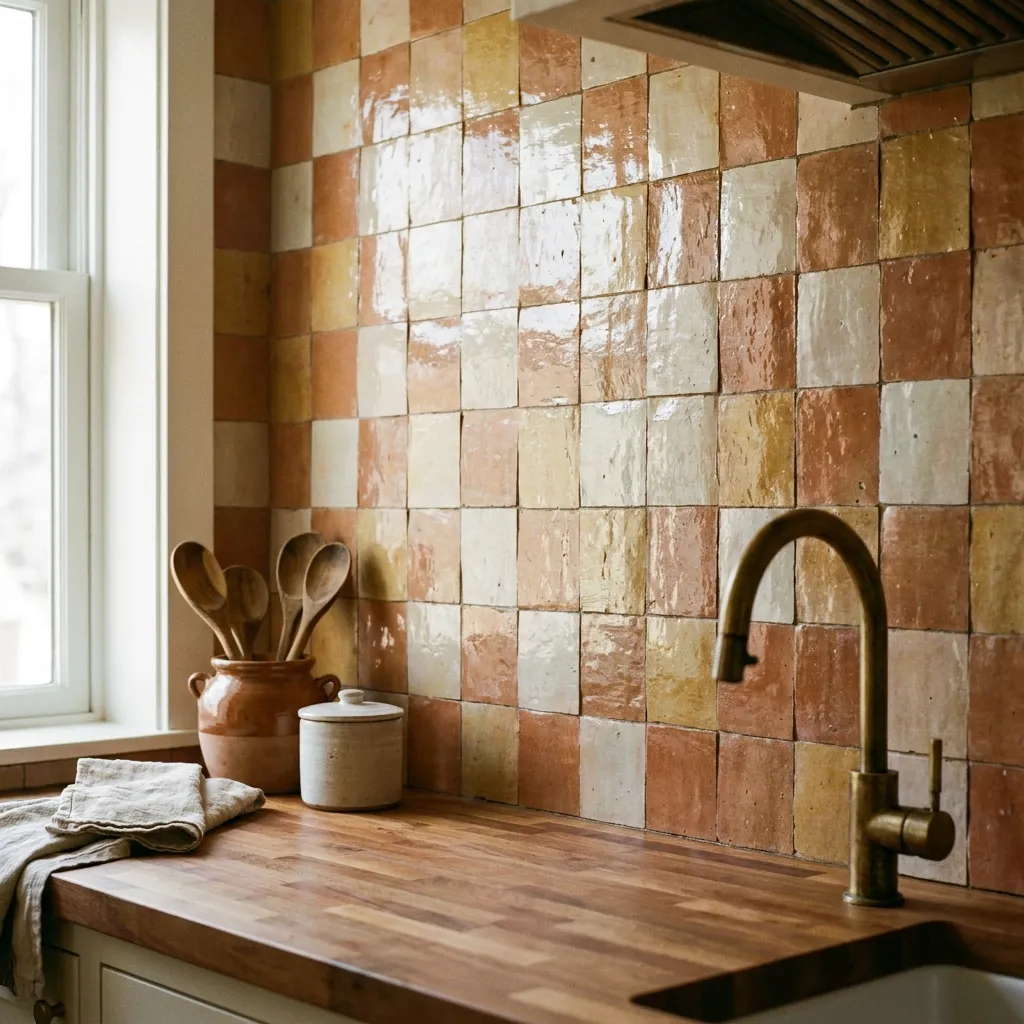
- Textured tile adds visual interest without overwhelming the space.
- Handmade-style tiles bring warmth through subtle imperfections.
- Works as a focal point behind the stove or sink.
- Pairs naturally with warm metals and wood tones.
A textured backsplash does more heavy lifting in a kitchen than most people expect. Flat, glossy subway tile is common, but handmade-style tiles with slight variation in color and surface catch the light differently across the day, giving the wall a sense of movement and warmth. This small design choice adds character to an otherwise functional part of the kitchen, turning it into something worth noticing. These subtle imperfections feel more human-made than mass-produced, and they photograph beautifully under natural light, especially near a window or above a stove.
That’s why many designers recommend choosing one textured element, like a backsplash, rather than layering texture everywhere at once. Keeping the rest of the kitchen relatively simple lets the tile become the standout feature instead of competing with other busy surfaces. Warm tones like terracotta, cream, or soft green work particularly well because they echo natural materials already found in most kitchens, like wood or stone. Even a small section behind the stove can make a noticeable difference, giving the whole room a more intentional, finished feel without a full renovation.
6. Cozy Breakfast Nook
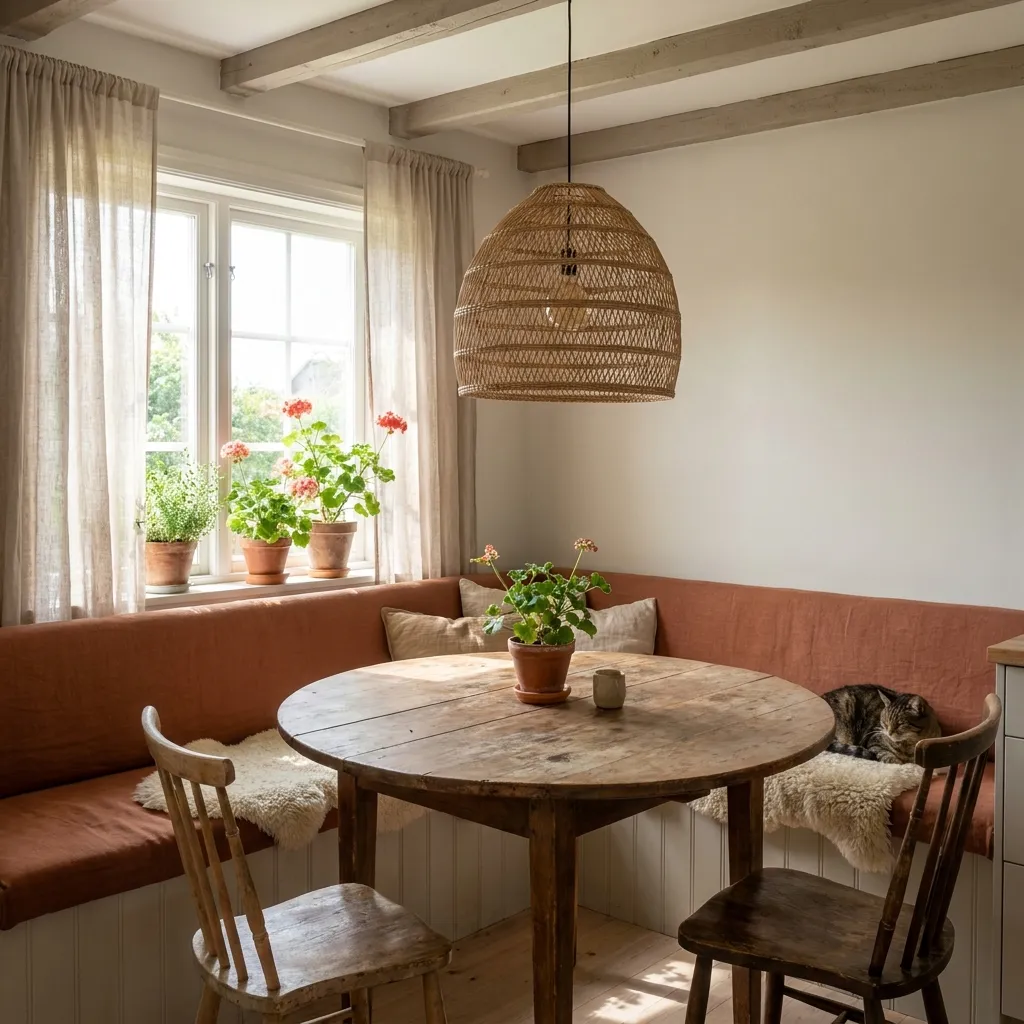
- A nook creates a dedicated, relaxed spot for meals.
- Cushioned seating adds comfort and softness to the space.
- Natural light and greenery make the corner feel alive.
- Ideal for smaller kitchens without a full dining room.
A breakfast nook turns an unused corner into one of the most inviting parts of the home. Even a small round table with a cushioned bench can create a sense of place that a kitchen island or bar seating often lacks. It becomes the spot for slow mornings, quiet coffee, or casual meals that don’t require setting a full dining table. Having at least one soft, seated corner like this balances out the harder surfaces of counters and cabinets with something warmer and more relaxed, making the whole room feel more like a place to linger.
I’ve seen this work well in even the tightest kitchen layouts, where a single window nook becomes the most-used seat in the house. Sheer curtains soften harsh daylight, while a woven pendant light overhead adds warmth once the sun goes down. Cushions in a warm fabric, like terracotta or muted rust, tie the nook visually to the rest of the kitchen’s palette. This idea works especially well for anyone wanting function and comfort in one small footprint, without needing to sacrifice counter space or storage elsewhere in the room.
7. Vintage Brass Fixtures
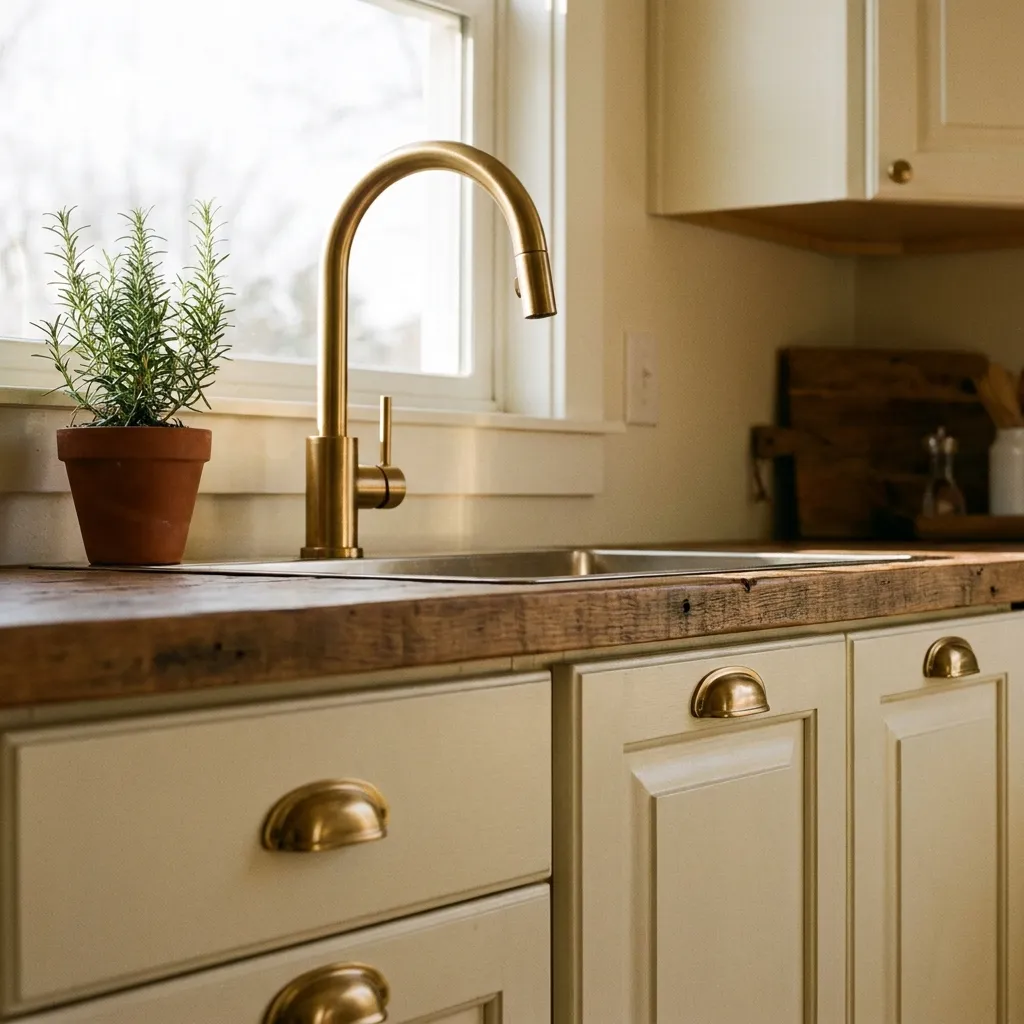
- Brass fixtures add warmth compared to cool chrome or steel.
- Small hardware changes can update a kitchen without a full remodel.
- Works well mixed with wood, cream, and muted color palettes.
- A budget-friendly way to elevate an existing kitchen’s look.
Swapping out cold, chrome fixtures for warm brass is one of the easiest ways to shift a kitchen’s entire mood. Faucets, cabinet pulls, and even light switch covers in brushed or antique brass reflect light differently than steel, giving surfaces a softer, richer glow throughout the day. This kind of change doesn’t require touching a single cabinet door or wall color, yet it noticeably warms up the whole room. Small, considered choices like this often tie separate elements together into something that feels cohesive rather than mismatched or purely functional.
In my experience, brass ages beautifully compared to chrome, which can look sterile no matter how new it is. Over time, brass develops a soft patina that only adds to its character, much like the wood tones it pairs so well with. Homeowners on a budget often start here, replacing just a faucet or a handful of cabinet knobs, before deciding whether to invest in larger changes. It’s a low-risk way to test whether a warmer aesthetic suits the space, and it rarely feels like a mistake even years down the line, unlike bolder trend-driven choices.
8. Layered Area Rug
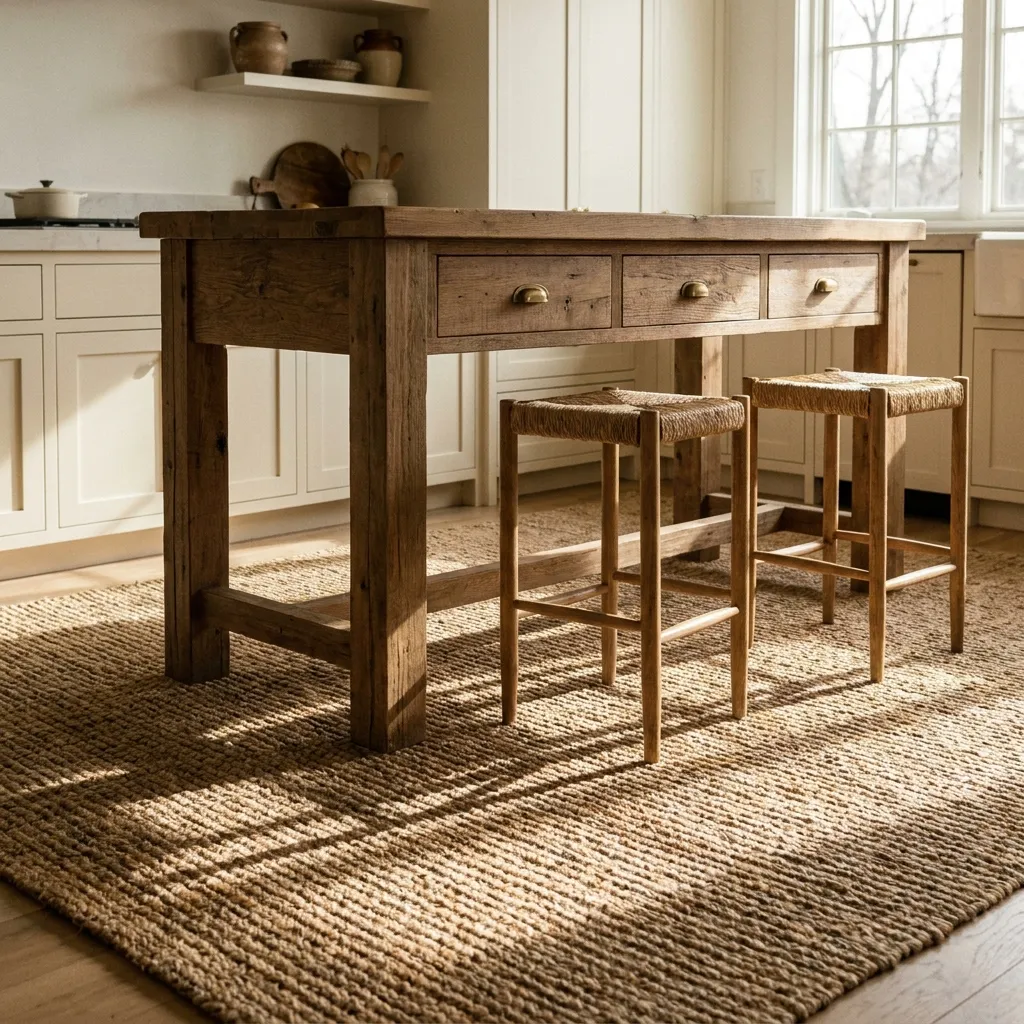
- A rug softens hard flooring and adds visual warmth underfoot.
- Natural fiber rugs like jute suit a cozy, textural kitchen.
- Helps define a specific zone, like an island or sink area.
- Easy to swap out seasonally for a quick refresh.
Hard flooring is practical in a kitchen, but it can also make the space feel a little cold and clinical without something to soften it. A woven rug, especially in natural fibers like jute or sisal, adds texture underfoot and visually breaks up large stretches of tile or wood flooring. It also helps define specific zones within an open kitchen, like marking out the space in front of a sink or island as its own little area. This kind of layering adds warmth at ground level, which is often overlooked in favor of upper details like cabinets or lighting.
I’ve noticed that natural fiber rugs tend to work better here than plush or shag styles, since they’re easier to clean and more resistant to spills common in kitchens. A rug in a neutral or warm tone ties easily into the existing color palette without adding visual clutter. It’s also one of the simplest seasonal updates, since swapping a rug takes minutes and instantly refreshes the room’s feel. For anyone hesitant to make permanent changes, this is a low-commitment way to test how texture affects the overall warmth of the space.
9. Warm Terracotta Accents
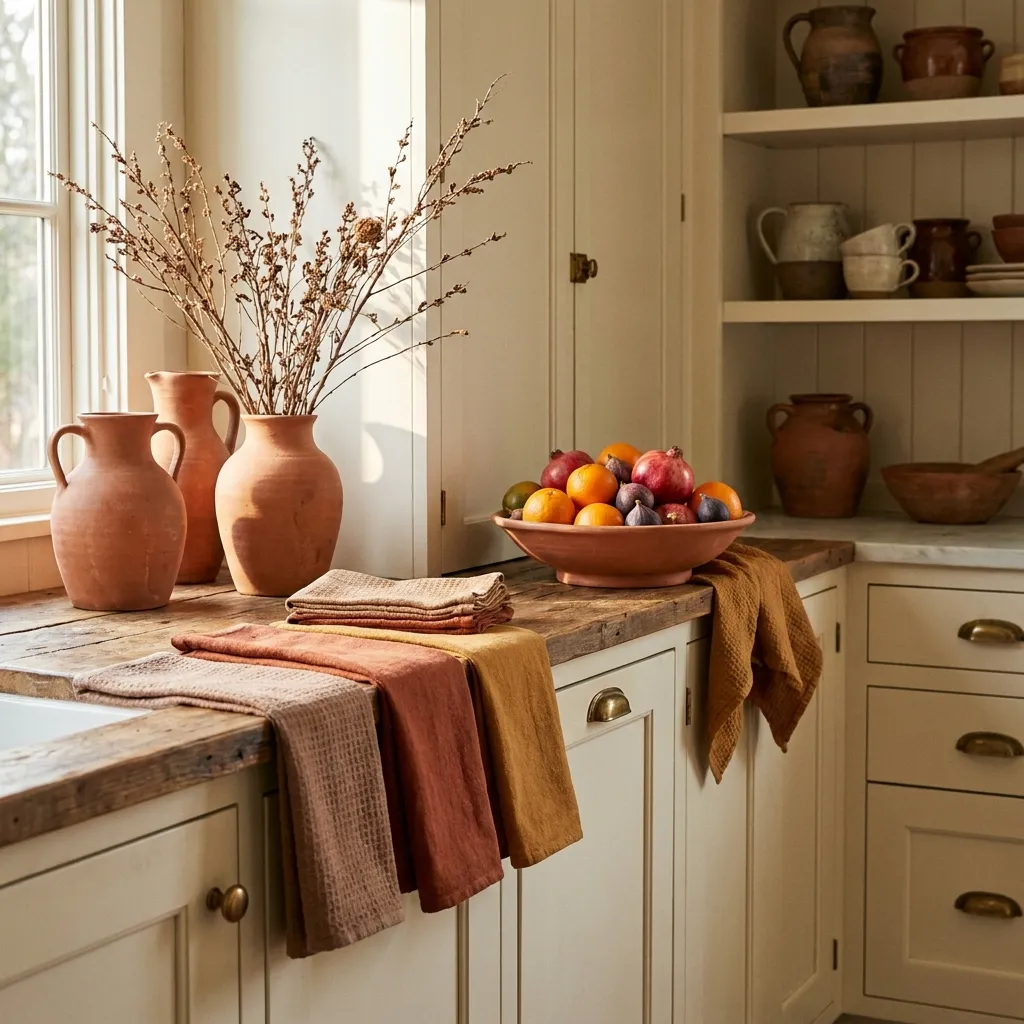
- Terracotta tones add warmth without a full color overhaul.
- Small accents like bowls or vases are easy to update seasonally.
- Pairs naturally with wood, cream, and sage color schemes.
- A simple way to add color without overwhelming the space.
Not every warm update needs to involve tile, cabinets, or fixtures — sometimes it’s as simple as styling the counters with the right accent pieces. Terracotta tones, whether in a fruit bowl, a vase, or dish towels, instantly bring an earthy warmth into a kitchen that might otherwise lean too neutral or clinical. These small styling choices are inexpensive and easy to change out whenever you want a refresh, without committing to anything permanent. A truly cozy kitchen often relies on layers like this, where color and texture work together at a small scale to make the whole room feel considered and personal.
That’s why many designers recommend starting with accents before tackling bigger renovations. A terracotta vase or a stack of clay-toned napkins can test whether a warmer palette feels right in the space, long before committing to paint or tile in the same tone. These pieces also transition well between seasons, working just as nicely in summer as they do alongside autumn styling. It’s an accessible entry point for anyone wanting to experiment with warmth and color without touching a single fixed surface in the kitchen.
10. Wood Beam Ceiling
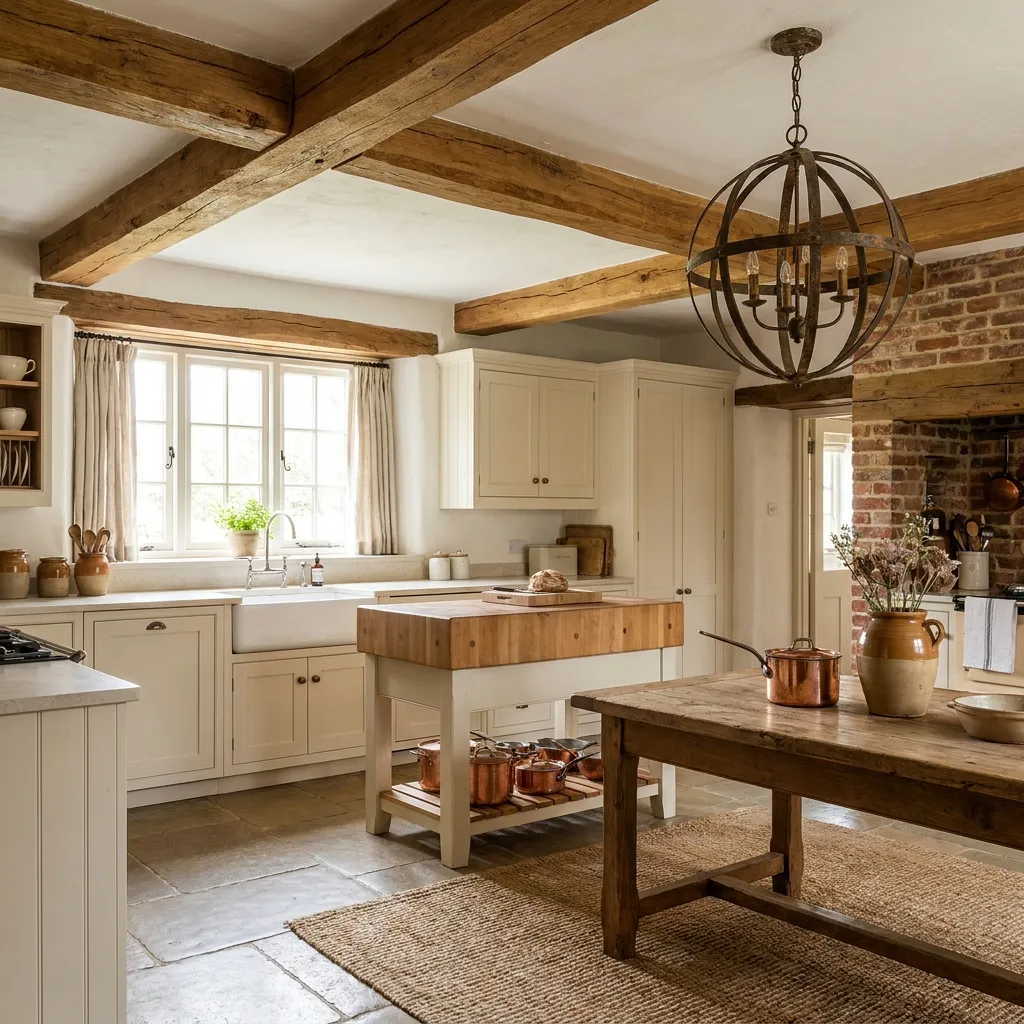
- Exposed beams add architectural warmth overhead.
- Works especially well in kitchens with higher ceilings.
- Creates contrast against lighter walls and cabinetry.
- Pairs naturally with farmhouse or rustic-modern styles.
Most kitchen design focuses on cabinets, counters, and floors, leaving the ceiling as an afterthought. Exposed wood beams change that entirely, drawing the eye upward and adding a layer of architectural warmth that flat, painted ceilings simply can’t offer. Against lighter walls or white ceilings, the contrast makes the beams feel intentional and grounding rather than heavy. Details like this let structure itself become part of the design rather than something hidden away. For kitchens with higher ceilings, this idea is especially effective at making a large space feel warmer and more human-scaled.
I’ve seen this work particularly well in older homes or open-concept kitchens where the ceiling can otherwise feel vast and empty. Even faux beams, made from lightweight materials, can achieve a similar effect without the structural work of exposing real ones. Pairing them with a simple pendant light hung between two beams adds a focal point without competing with the architecture itself. It’s a design choice that photographs beautifully and adds a sense of craftsmanship, making the kitchen feel more like a considered space than a purely functional room.
11. Woven Basket Storage
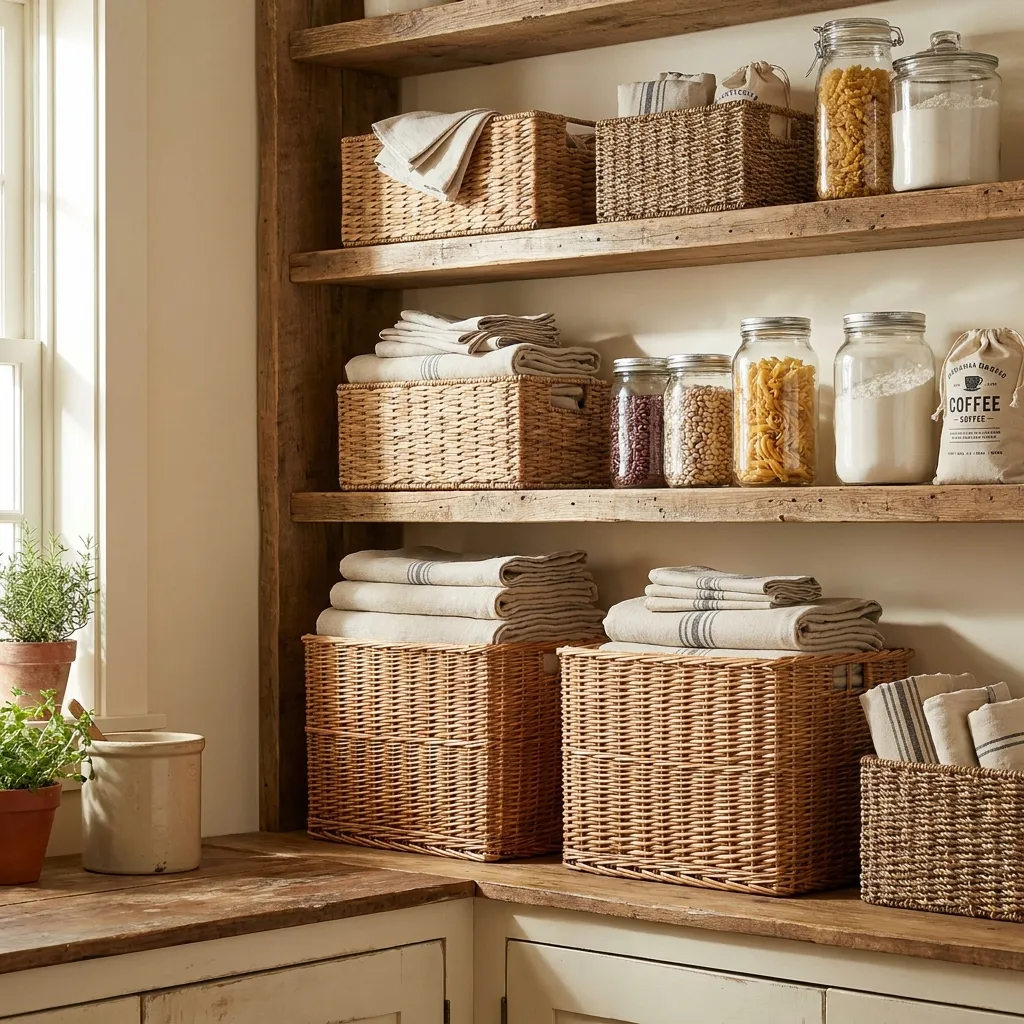
- Baskets add texture while keeping storage organized.
- A practical way to hide clutter without closed cabinets.
- Natural materials soften the look of open shelving.
- Easy to find in various sizes to fit any space.
Storage doesn’t have to mean closed cabinets and hidden clutter. Woven baskets offer a practical middle ground, keeping items organized while adding a layer of natural texture that plastic bins or metal containers can’t replicate. Stacked on open shelves or tucked under a counter, they hide everyday mess without sacrificing the warm, textural look that makes a kitchen feel inviting. This kind of practical styling lets function and warmth work together instead of competing, so storage solutions actually add to the room’s character rather than detracting from it.
In my experience, baskets work best when sized specifically for their contents, rather than grabbing whatever’s available. A shallow basket for linens, a deeper one for produce, and a smaller version for utensils all serve different purposes while maintaining a consistent, woven texture throughout the space. This creates a sense of intentional design even in the most functional corners of the kitchen. It’s also one of the most affordable updates on this list, since baskets are widely available and require no installation, just thoughtful placement on existing shelving or countertops.
12. Soft Sage Green Walls
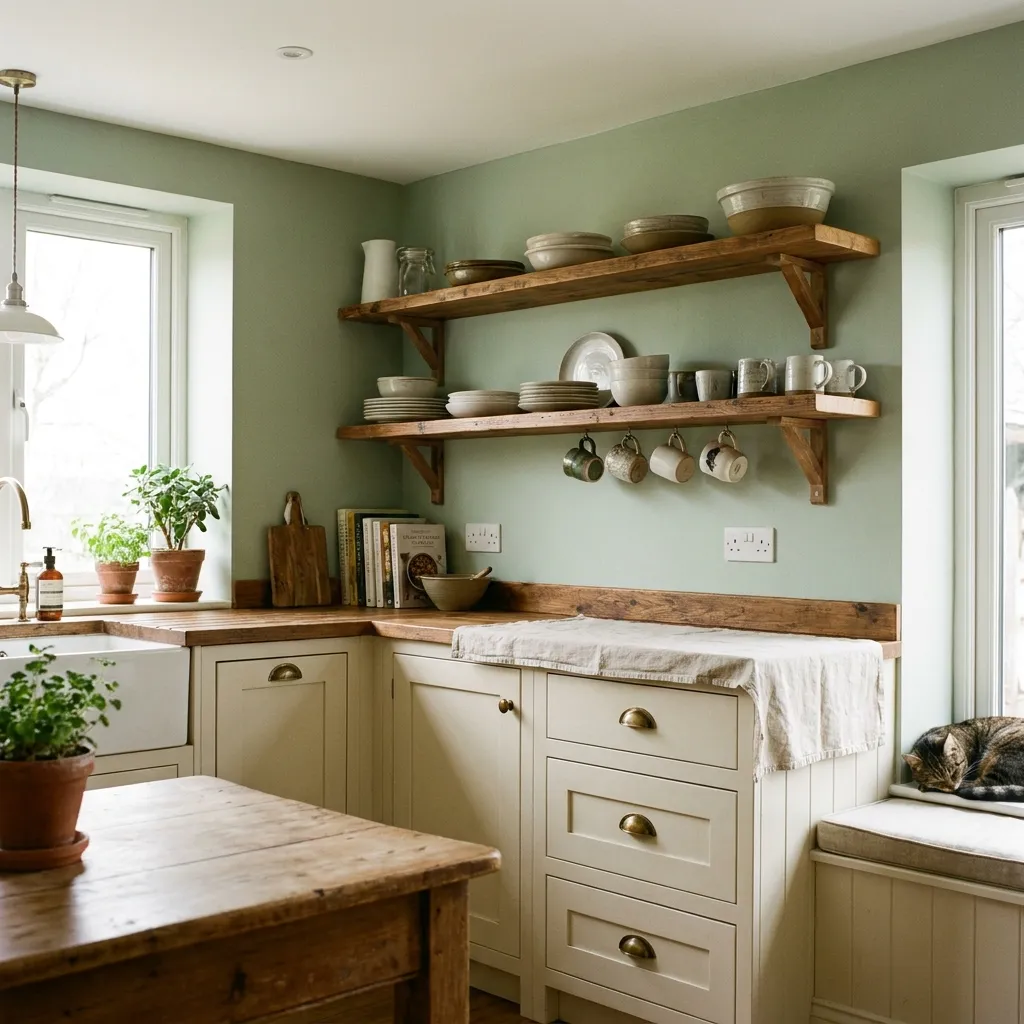
- Sage green adds color without feeling too bold or trendy.
- Pairs beautifully with wood tones and brass fixtures.
- Creates a calming, nature-inspired kitchen atmosphere.
- Works well as an accent wall or full room color.
Color has a bigger impact on mood than most people realize, and sage green has become a favorite for kitchens precisely because it feels both fresh and grounding at the same time. Unlike stark white or cold gray walls, this muted green tone brings in a sense of nature without overwhelming the space or feeling like a passing trend. Wall color often sets the overall tone of a room, and sage works particularly well because it pairs effortlessly with warm wood, brass, and cream tones already common in kitchen design, tying the whole room together into one calm, cohesive palette.
I’ve noticed that sage green tends to age better than brighter greens or blues, since its muted quality keeps it from feeling dated the way more saturated colors sometimes do. Whether used as a full wall color or just on a single accent wall behind open shelving, it creates a backdrop that makes other design elements, like ceramic dishware or wood accents, stand out more naturally. It’s a versatile choice for anyone wanting color without committing to something too bold, and it photographs beautifully under both natural and warm artificial light.
13. Copper Cookware Display
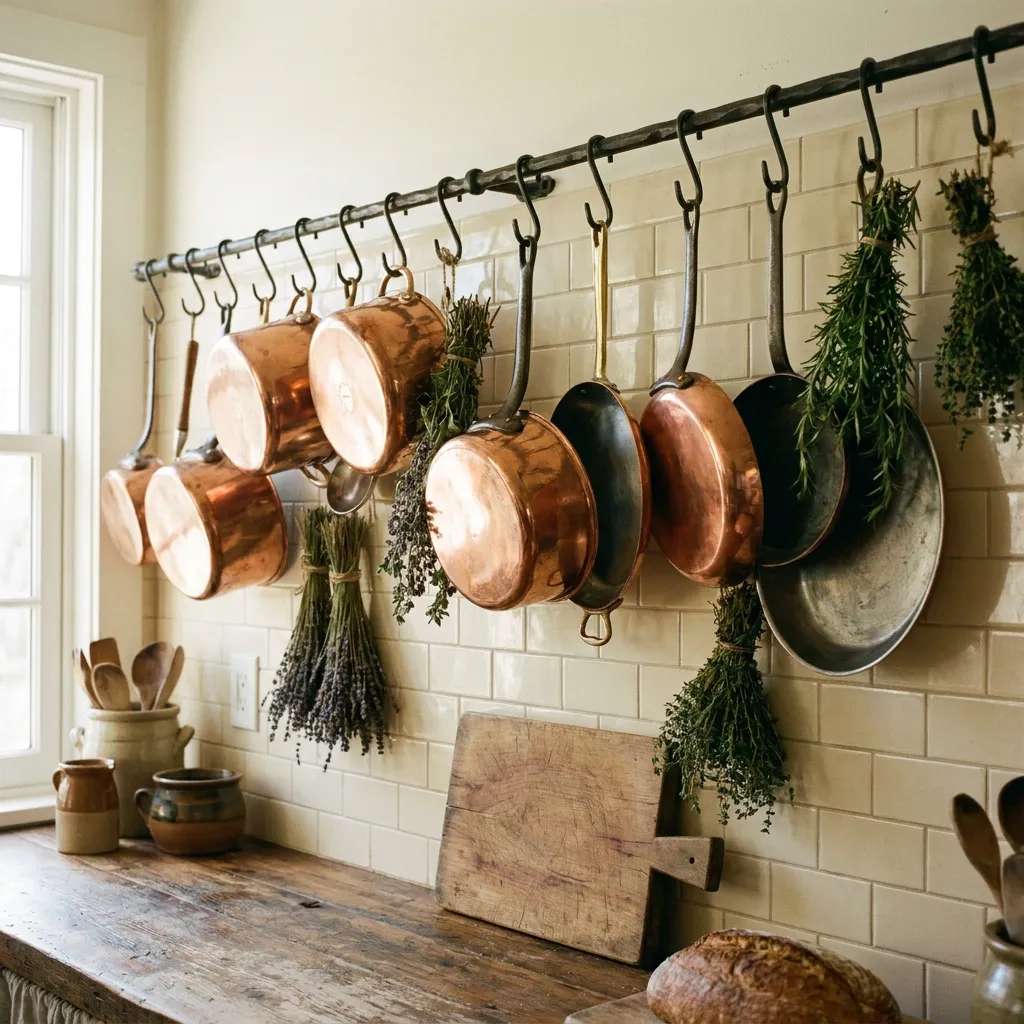
- Hanging copper adds warmth, shine, and functional storage.
- Frees up cabinet space while creating a decorative feature.
- Pairs beautifully with warm walls and wood tones.
- Works best in kitchens with some open wall space.
Copper cookware does double duty in a kitchen, serving as both a practical storage solution and a genuinely beautiful design feature. Hanging pots and pans on a rail or hooks frees up valuable cabinet space while turning everyday tools into part of the room’s decor. The warm, reflective glow of copper catches natural light in a way that painted surfaces simply can’t match, adding a subtle shine that feels elevated without being flashy. This kind of dual-purpose styling means storage becomes decoration, and nothing feels wasted or purely functional in a room that’s meant to feel warm and lived-in.
I’ve seen this work especially well in kitchens with limited cabinet space, where hanging storage solves a practical problem while adding visual interest at the same time. Copper develops a natural patina over time, deepening in color rather than looking worn, which only adds to its charm. Pairing it with dried herbs or a few hanging utensils nearby completes the look without requiring any additional purchases. It’s a detail that feels collected and personal, rather than store-bought, making the kitchen feel like it has history and character built in.
14. Warm Pendant Lighting
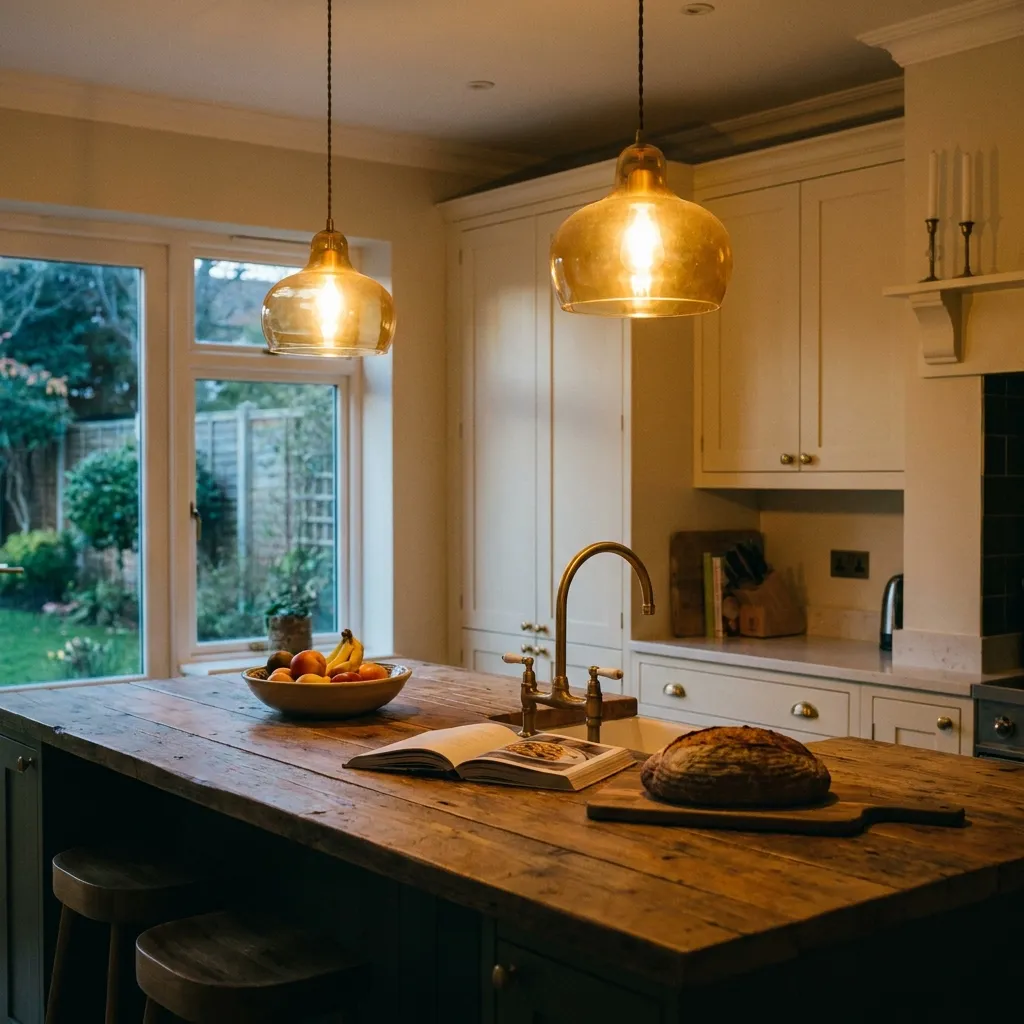
- Pendant lights create a focal point above islands or counters.
- Warm glass or amber tones soften harsh overhead lighting.
- Hanging fixtures add height and visual interest to the ceiling.
- A relatively simple upgrade compared to full lighting overhauls.
Pendant lighting over an island or counter does more than just illuminate a workspace, it acts as a visual anchor that draws the eye and adds a sense of intention to the room. Choosing warm glass shades, like amber or smoked tones, softens the light itself, avoiding the harsh, clinical brightness that plain bulbs often produce. Lighting choices like this matter, since overhead fixtures are one of the first things people notice when they walk into a room. Hanging pendants also add vertical interest, breaking up an otherwise flat ceiling with a bit of dimension and warmth.
That’s why many designers recommend starting with pendant lighting when updating a kitchen on a budget. Unlike rewiring an entire room, swapping out one or two fixtures above an island is a manageable project that delivers a noticeably different mood by evening. Lower-hanging pendants, in particular, create a more intimate feel, especially when paired with dimmable bulbs. This small change often ends up being one of the most photographed details in a kitchen, since warm light interacts so beautifully with wood tones and brass accents nearby.
15. Cream Subway Tile
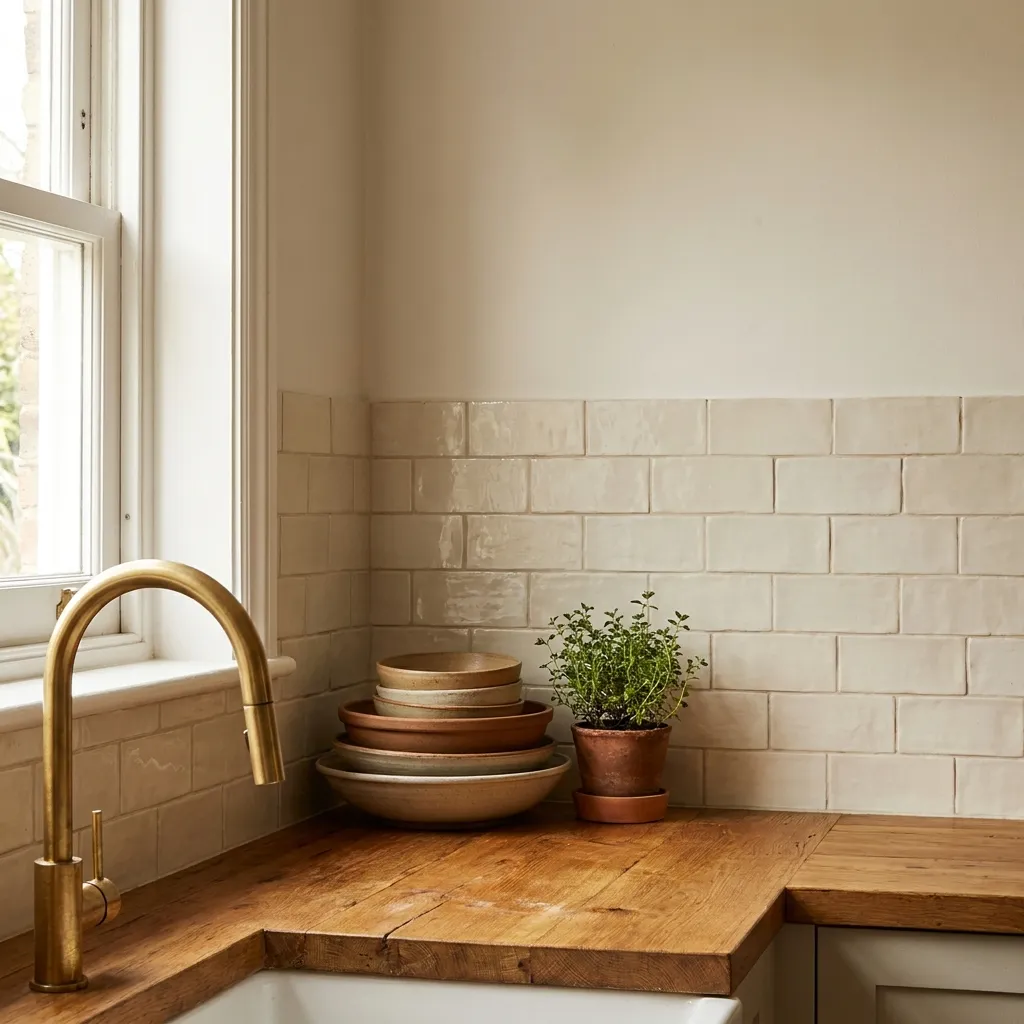
- Cream tile offers warmth compared to stark white options.
- A classic subway shape keeps the look timeless and versatile.
- Matte finishes feel softer and less clinical than glossy tile.
- Pairs easily with wood, brass, and sage color palettes.
Subway tile is a kitchen classic, but the color choice makes all the difference in how warm or cold the final look feels. Stark white tile can read as clean but sometimes sterile, while a soft cream tone brings the same timeless shape into a warmer, more inviting territory. Choosing warmth over starkness, even within a familiar, classic design element, makes a real difference. Pairing cream tile with a matte rather than glossy finish softens the overall look even further, avoiding harsh light reflections that can make a backsplash feel more clinical than comforting.
In my experience, cream subway tile tends to age better than bright white, since it doesn’t show yellowing over time the way true white grout and tile sometimes can. It also blends more naturally with wood countertops and brass fixtures, creating a cohesive palette rather than a stark contrast. This makes it a safe, versatile choice for anyone wanting a timeless backsplash that won’t feel dated in a few years, while still contributing to the warm, lived-in feeling that defines a truly welcoming kitchen space.
16. Farmhouse Style Curtains
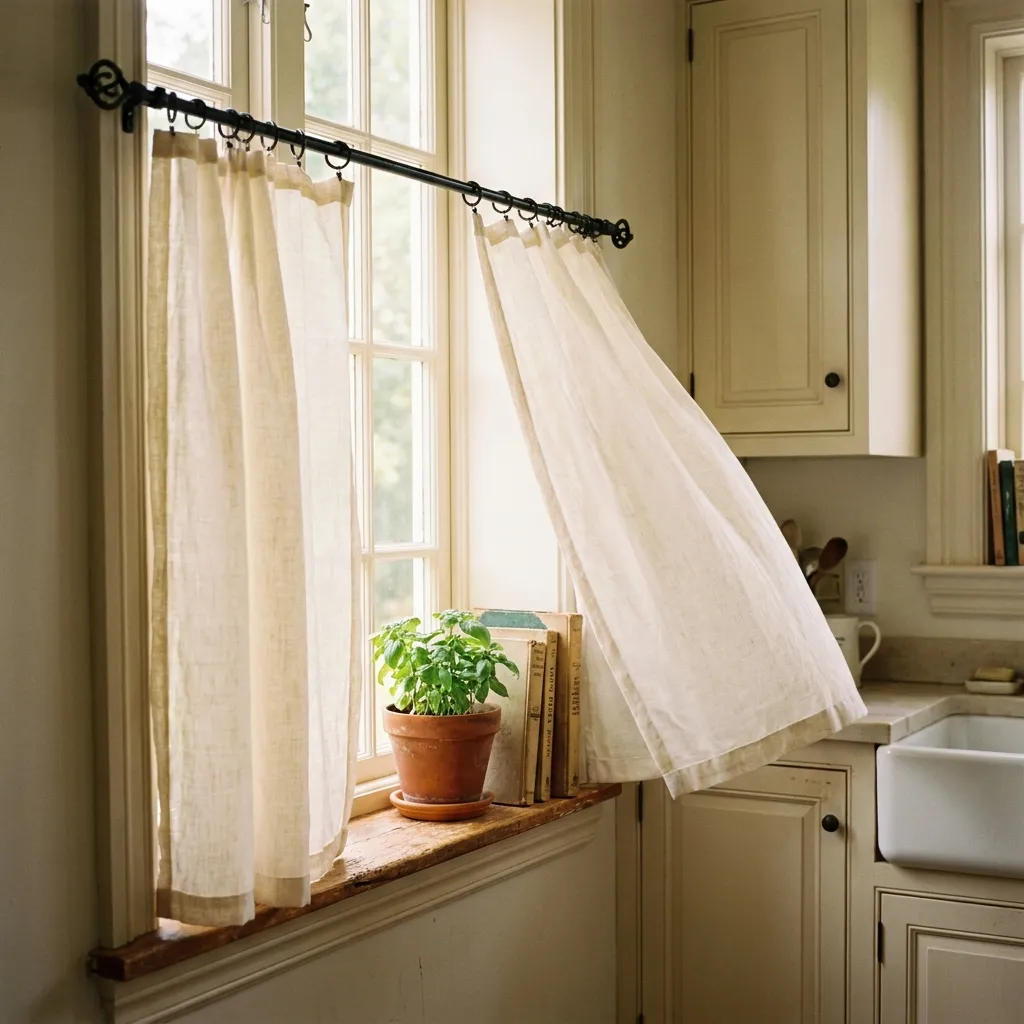
- Soft curtains add texture and softness to hard kitchen surfaces.
- Linen fabric filters light gently without blocking it completely.
- A simple, affordable way to frame a kitchen window.
- Easy to swap seasonally for a quick style refresh.
Kitchens are full of hard surfaces, counters, tile, cabinets, so a simple fabric element like curtains can add much-needed softness to the room. Lightweight linen in a cream or warm neutral tone filters natural light beautifully, creating a gentle glow rather than blocking the window entirely. Fabric is one of the few materials in the room that moves and drapes, adding a sense of ease that hard surfaces can’t replicate. Even a small kitchen window looks more finished with the right curtain treatment, framing the view while softening the light that enters throughout the day.
I’ve noticed that simple gathered curtains on a slim iron rod tend to look more intentional than heavier drapery, which can feel out of place in a working kitchen. Linen in particular has a relaxed, slightly wrinkled texture that suits a lived-in aesthetic better than crisp, formal fabrics. This is also one of the easiest seasonal updates on this list, since swapping curtain panels takes only a few minutes and instantly shifts the room’s feel. It’s a low-cost detail that pulls the whole window area together into something warm and considered.
17. Matte Black Accents
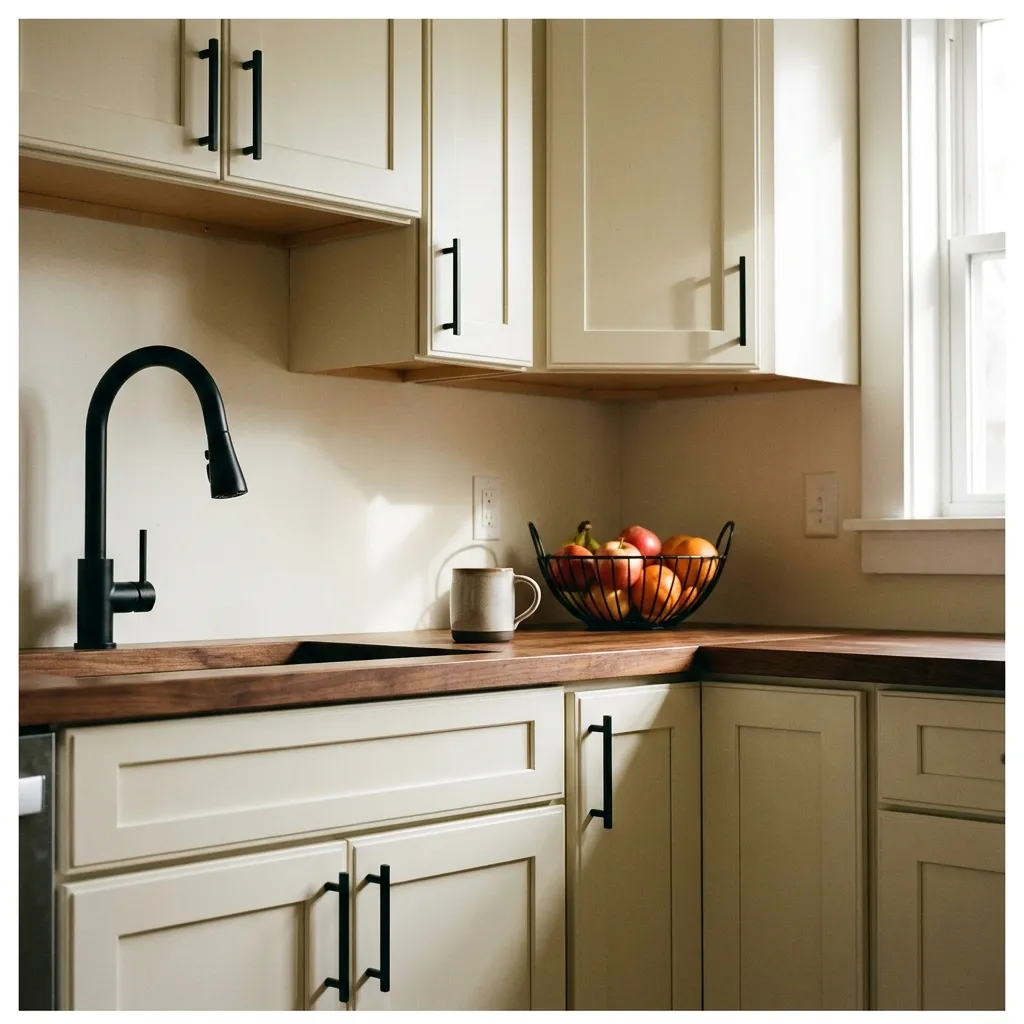
- Matte black adds contrast without feeling cold like chrome.
- Works well as an accent alongside warmer wood and cream tones.
- A small hardware change with a noticeable visual impact.
- Balances softness with a touch of modern edge.
A little contrast keeps a warm kitchen from feeling flat, and matte black accents do exactly that. Unlike shiny chrome, matte black has a soft, non-reflective quality that still feels warm rather than cold or industrial. Used sparingly, on a faucet, a few cabinet pulls, or a light fixture, it grounds the space and adds a bit of modern edge without disrupting the overall warmth. Everything doesn’t have to be soft and pale; a few darker touches actually help the warmer elements stand out even more by comparison, creating a more layered, considered look overall.
That’s why many designers recommend using black as an accent rather than a dominant color in a warm kitchen. Too much of it can tip the room toward feeling stark or cold, but a few well-placed pieces, like hardware or a pendant fixture, add just enough contrast to keep things interesting. Paired with wood, cream, and brass, matte black becomes the detail that keeps the eye moving around the room. It’s an easy addition to test, since hardware swaps are inexpensive and reversible if the look doesn’t end up feeling right.
18. Potted Herb Garden
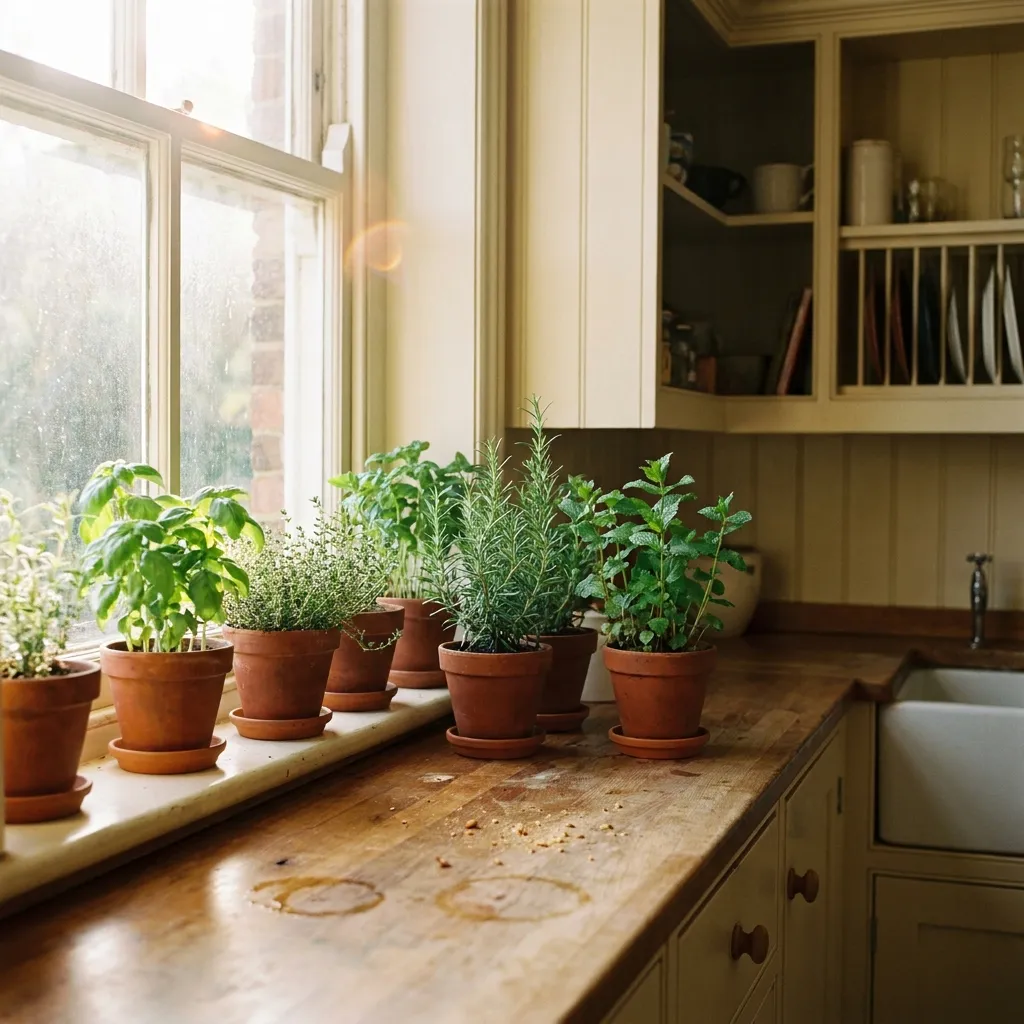
- Fresh herbs add greenery, fragrance, and everyday usefulness.
- Terracotta pots tie naturally into a warm color palette.
- A windowsill garden makes the kitchen feel alive and tended.
- Practical for cooking while doubling as simple decor.
Nothing makes a kitchen feel more alive than a bit of greenery, and a small herb garden on the windowsill does exactly that while staying genuinely useful. Fresh basil, thyme, or rosemary within reach of the stove means fewer trips to the store and a little more flavor in everyday cooking. Decor and function overlap so naturally here that the plants never feel like an afterthought. Terracotta pots, in particular, echo the same earthy warmth found in other parts of the kitchen, making the herb garden feel like part of the overall design rather than a separate addition.
I’ve seen this work well even in kitchens with very little natural light, as long as the herbs are placed in the brightest available spot and rotated occasionally. A row of small pots along a windowsill takes up very little space but adds an enormous amount of visual life to the room. It’s also one of the most rewarding updates on this list, since the herbs are both decorative and genuinely useful in daily cooking. Over time, tending to them becomes part of the kitchen’s rhythm, adding a sense of care to the whole space.
19. Warm Wood Flooring
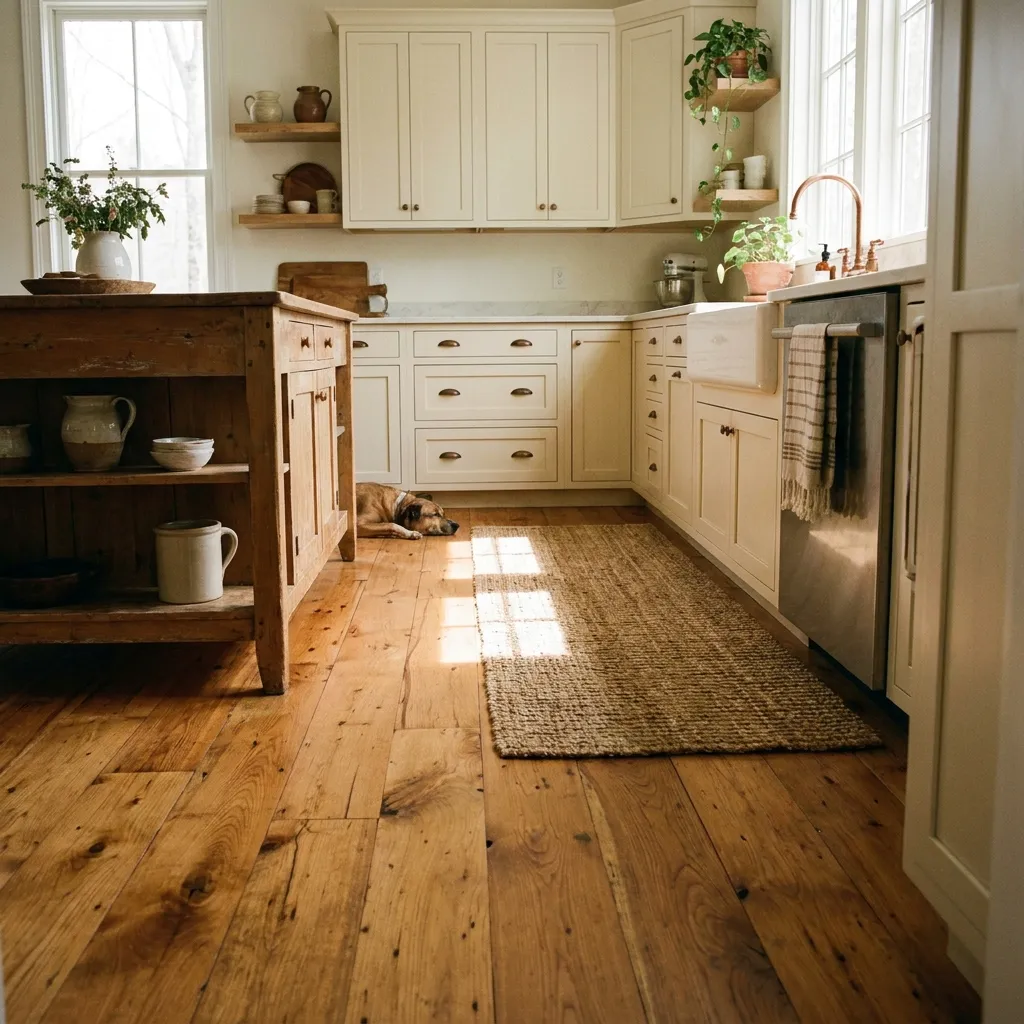
- Warm wood floors ground the whole kitchen in natural texture.
- Pairs effortlessly with most cabinet colors and finishes.
- Adds warmth underfoot compared to cold tile or stone.
- A larger investment, but one with long-lasting visual impact.
Flooring sets the tone for an entire kitchen, and warm wood does more to establish a welcoming feel than almost any other single material choice. Unlike cold tile or polished stone, wood has a natural grain and warmth that feels inviting underfoot and visually throughout the room. Flooring often deserves attention from the ground up, since it covers more visual real estate than most other design elements combined. Honey and warm brown tones in particular reflect light softly, adding depth to the room without competing with cabinetry, countertops, or backsplash choices layered above it.
In my experience, wood flooring is one of the bigger investments on this list, but it’s also one of the longest-lasting in terms of visual impact. Unlike trend-driven tile patterns, warm wood tones remain a classic choice that suits nearly any style shift down the road, from farmhouse to modern minimalist. Adding a simple woven runner near the sink or stove protects high-traffic areas while adding another layer of texture. For anyone planning a larger renovation, flooring is worth prioritizing early, since it influences how every other design choice in the kitchen will read once complete.
20. Ceramic Dishware Display
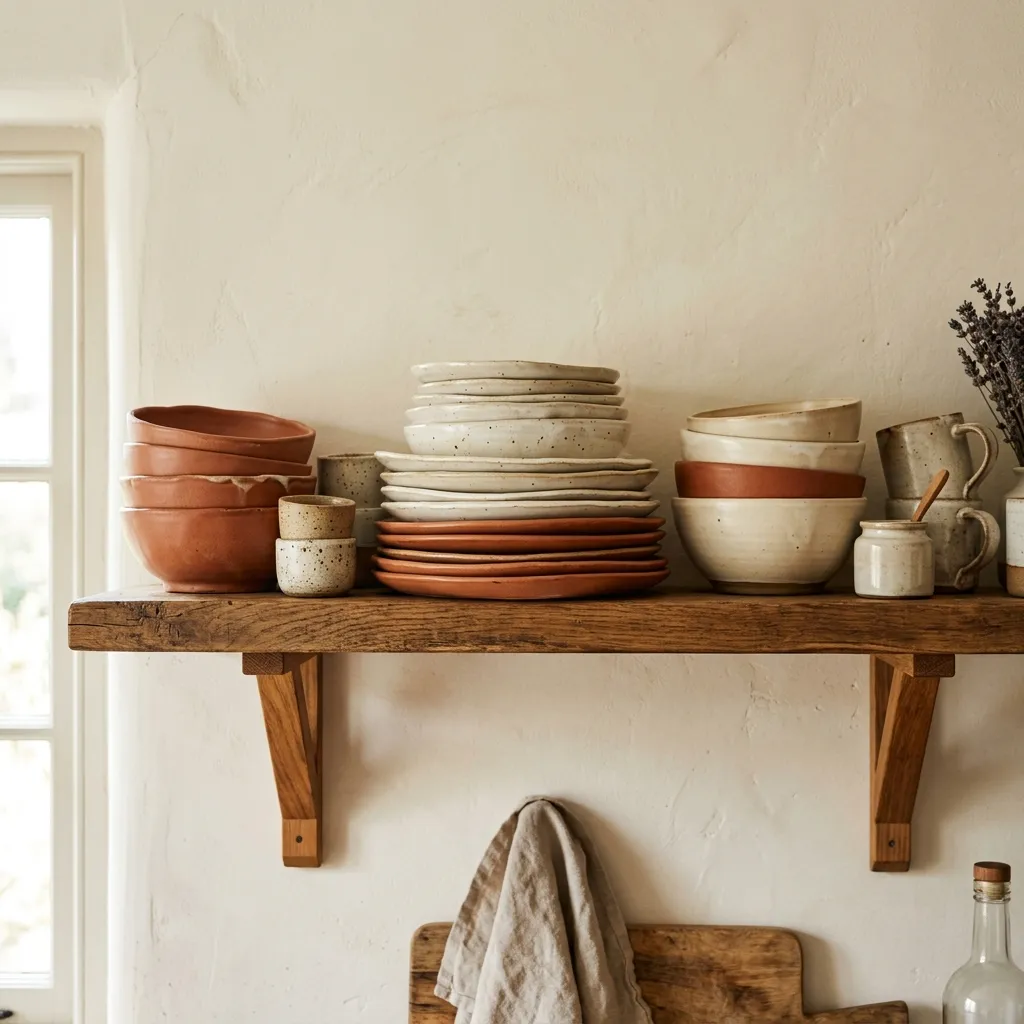
- Handmade ceramics add texture and individuality to open shelves.
- Displaying dishware turns everyday items into decor.
- Mixed glazes and tones create a curated, collected look.
- An easy way to personalize a kitchen without permanent changes.
Everyday dishware doesn’t have to stay hidden behind cabinet doors, especially when it’s the kind of handmade or textured ceramic that adds personality just by being visible. Stacked bowls and plates in varied but complementary tones turn open shelving into a styled display rather than plain storage. This kind of personal touch reflects the homeowner’s taste in a way that fixed finishes like tile or cabinetry can’t. Slight variations in glaze or shape between pieces add visual interest, making the collection feel gathered over time rather than bought all at once from a single set.
I’ve noticed that this idea works particularly well for renters or anyone hesitant to make permanent changes, since it requires no installation and can be completely rearranged whenever the mood strikes. Choosing a few complementary tones, like cream and terracotta, keeps the display looking intentional rather than mismatched. It’s also one of the more affordable updates on this list, since many people already own dishware that would work perfectly for this kind of styling, they just need to move it from a closed cabinet onto open shelving.
21. Stone Countertops
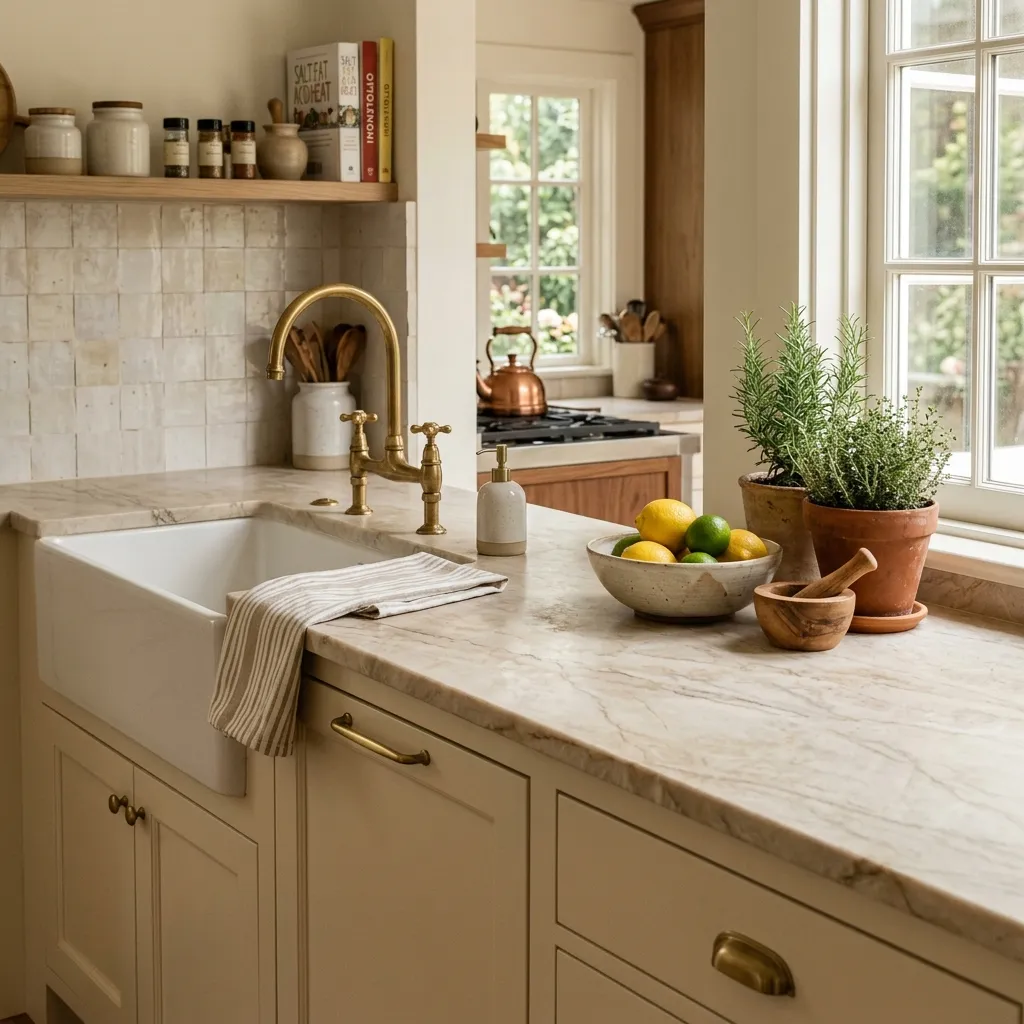
- Honed stone finishes feel warmer than polished, glossy surfaces.
- Subtle veining adds natural texture and visual interest.
- Pairs beautifully with warm wood and brass accents.
- A durable, long-term choice for busy kitchens.
Stone countertops often get a reputation for feeling cold or overly formal, but the finish makes a significant difference in how the material actually reads in a space. A honed, matte finish diffuses light softly rather than reflecting it harshly, giving the stone a warmer, more approachable feel compared to high-gloss polished versions. Stone can absolutely feel welcoming, as long as the tone and finish lean warm rather than stark white or cool grey. Subtle veining adds natural texture and movement across the surface, making it feel more organic and less like a manufactured, uniform slab.
That’s why many designers recommend honed finishes specifically for kitchens aiming for a warmer, lived-in feel. Paired with wood cabinetry and brass fixtures, warm-toned stone becomes part of a cohesive natural material palette rather than standing apart as a cold, separate element. It’s also an investment that pays off long-term, since quality stone countertops withstand daily use far better than more budget-friendly alternatives. For anyone renovating from scratch, this is a detail worth prioritizing early, since it anchors so many of the other material and color choices in the room.
22. Woven Pendant Shades
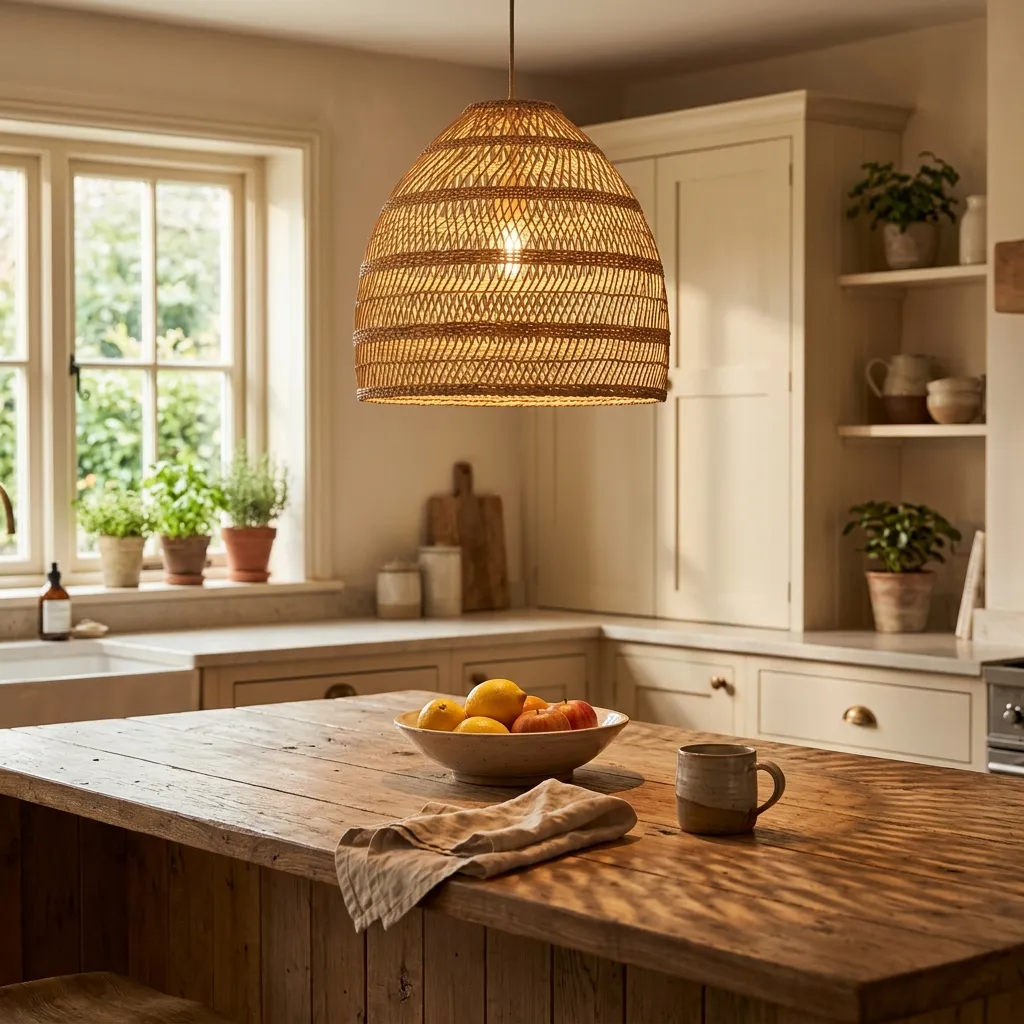
- Woven shades add texture and softness to lighting fixtures.
- Rattan or wicker pairs naturally with warm, earthy palettes.
- Creates a dappled, gentle glow rather than harsh direct light.
- A simple swap from standard glass or metal pendant shades.
Lighting fixtures don’t have to be limited to glass or metal shades, and woven materials like rattan bring an entirely different quality of light into a kitchen. Instead of a clean, direct glow, woven pendants cast a soft, dappled light through their natural gaps, adding texture to both the fixture itself and the light it produces. This kind of detail engages more than one sense, the visual texture of the woven material paired with the gentle quality of light it creates together, making the whole space feel warmer and more organic than standard lighting choices allow.
I’ve seen this work particularly well over kitchen islands, where the pendant becomes a natural focal point without needing anything else to draw the eye. Rattan and wicker also tie beautifully into other natural materials already present in most warm kitchens, like wood countertops or woven baskets on open shelving. It’s a relatively simple fixture swap that doesn’t require rewiring in most cases, making it an accessible update for anyone wanting to add warmth and texture to their lighting without committing to a larger electrical project.
23. Warm Neutral Paint
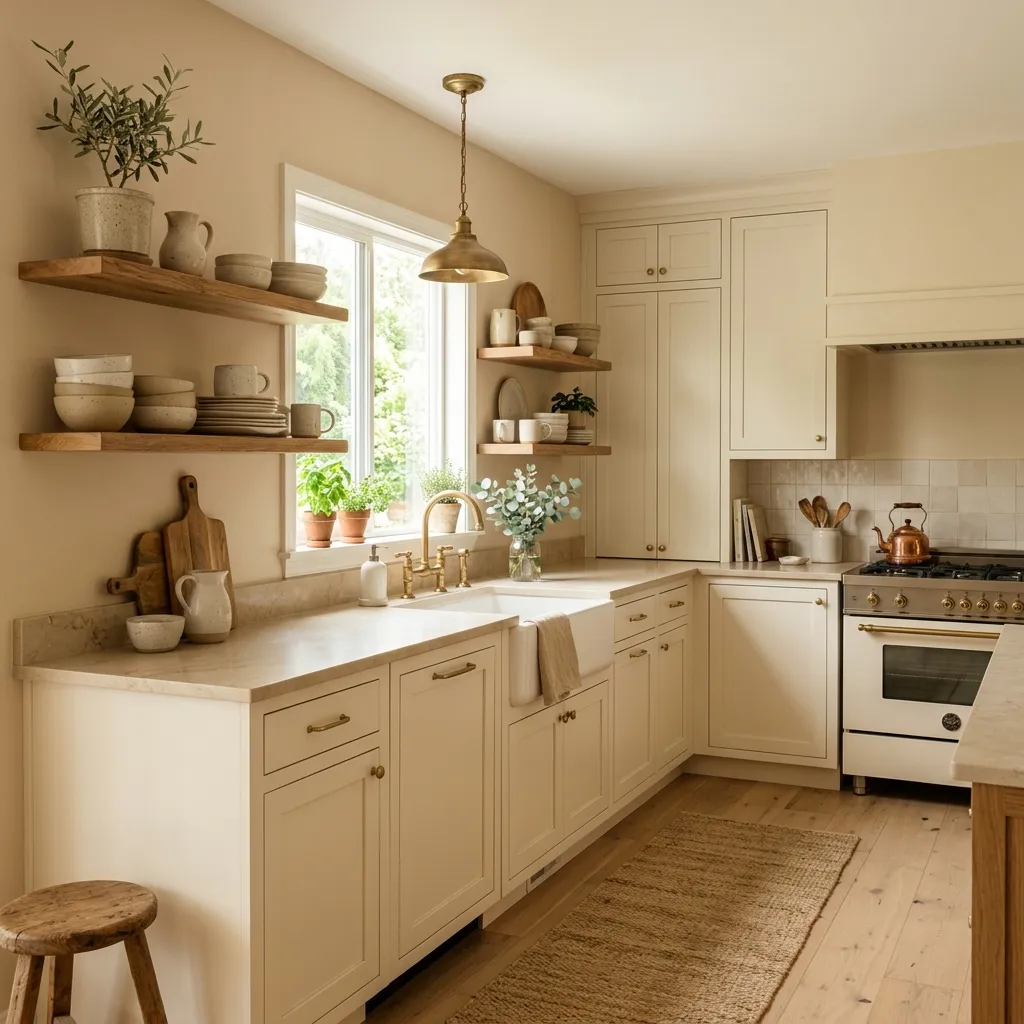
- Warm neutrals create a soft, cohesive backdrop for other elements.
- Avoids the starkness of cool greys or bright whites.
- Lets textures and materials stand out more naturally.
- A safe, versatile choice that suits nearly any style.
Paint color quietly shapes how every other element in a kitchen reads, and warm neutrals, soft beiges, warm greys, or muted taupes, create a backdrop that lets wood, brass, and ceramic details stand out naturally. Cooler tones can sometimes wash out these warmer materials, making the whole room feel slightly disjointed even when individual pieces are beautiful on their own. Wall color needs to support rather than compete with everything else in the space, and choosing a warm neutral is often the safest, most versatile decision in a full kitchen refresh.
In my experience, warm neutral walls also make a kitchen feel larger and more unified, since there’s no harsh contrast between the walls and cabinetry the way stark white against colorful cabinets sometimes creates. This monochromatic approach, where similar warm tones repeat across walls, cabinets, and even flooring, produces a calm, enveloping feeling rather than a busy, segmented one. It’s a low-risk choice for anyone unsure where to start with color, since warm neutrals rarely go out of style and adapt easily as other design trends shift around them over the years.
24. Hanging Greenery Accents
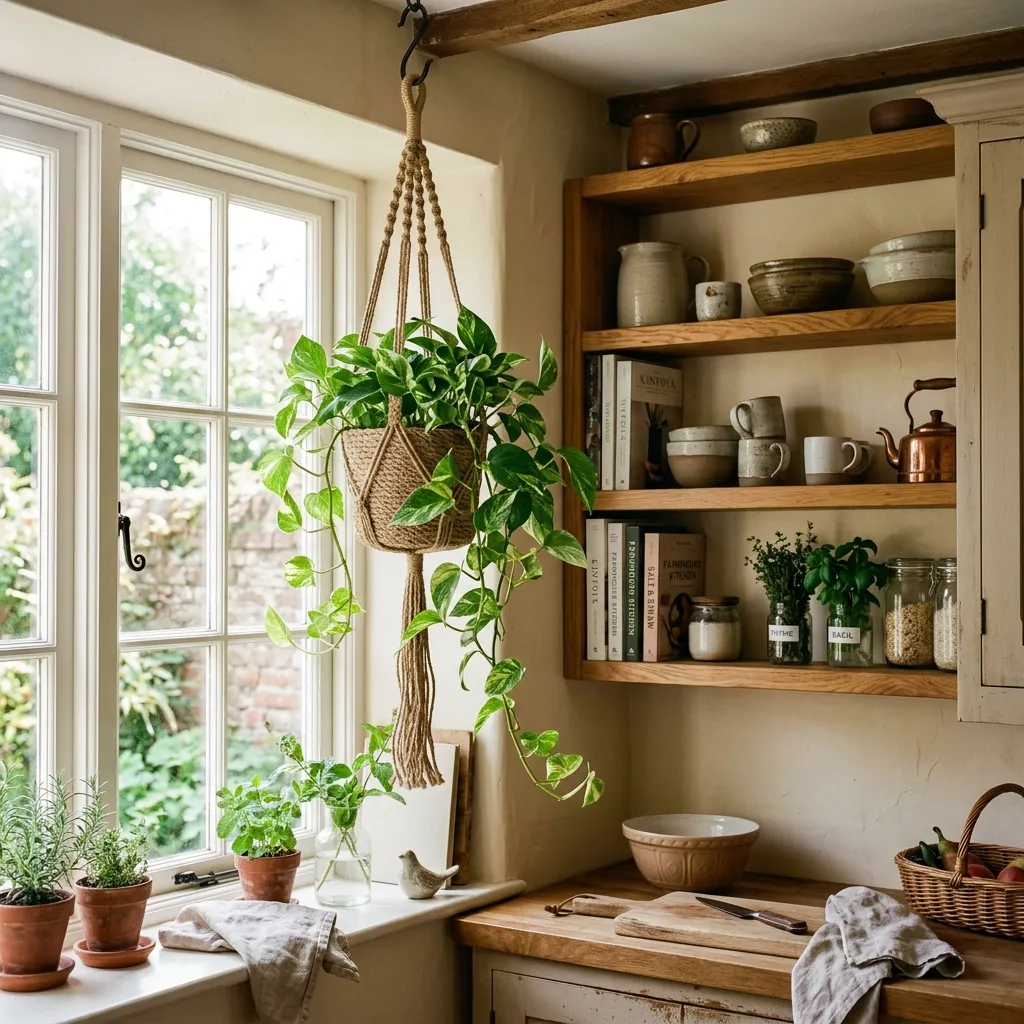
- Hanging plants add life without taking up counter space.
- Trailing greenery softens hard lines and empty corners.
- Works well near windows with consistent natural light.
- A low-cost, high-impact styling addition.
Not every plant needs to sit on a counter or windowsill, hanging greenery makes use of otherwise empty vertical space, adding life to a kitchen without sacrificing any usable surface area. A trailing pothos or similar low-maintenance plant in a woven hanger softens the hard lines of cabinetry and counters, introducing a bit of organic movement overhead. This vertical opportunity is often overlooked in favor of countertops and shelves, but hanging plants fill a gap that few other design elements address, bringing warmth and freshness to corners that would otherwise remain empty or purely functional.
I’ve noticed that hanging plants work best near a consistent light source, since inconsistent lighting can cause uneven growth or leggy vines over time. Choosing a woven or ceramic hanger, rather than plain plastic, keeps the planter itself in line with the room’s warmer material palette. It’s one of the most affordable updates on this list, requiring only a plant, a hanger, and a hook, yet it adds a noticeable sense of life and softness to the room. Even a single hanging plant can change how a corner of the kitchen feels.
25. Layered Warm Textiles
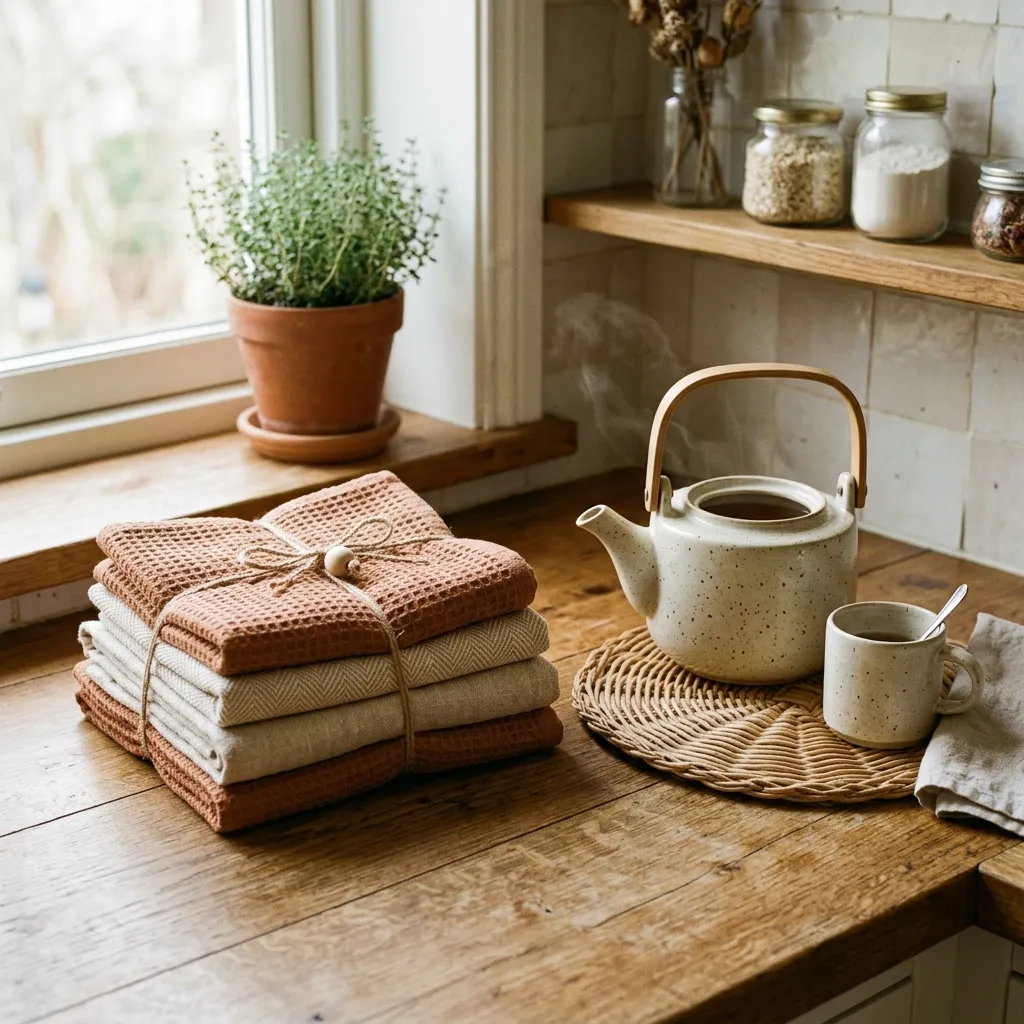
- Textiles add softness to an otherwise hard-surfaced room.
- Layering different fabrics creates visual and tactile depth.
- Easy to rotate seasonally without any permanent commitment.
- Ties smaller design details together into one cohesive look.
A kitchen is full of hard surfaces, so small textile touches, dish towels, trivets, table runners, do a lot of quiet work in making the space feel softer and more welcoming. Layering a few different warm-toned fabrics on a counter or hanging from an oven handle adds tactile variety that hard countertops and cabinets can’t provide alone. Details this small often come together through fabric textures that echo the same warm palette found in wood, brass, and ceramic elements throughout the room, tying every part of the design into one cohesive, considered whole rather than a collection of separate choices.
I’ve seen this work particularly well as a finishing touch, added after the bigger design decisions, cabinets, countertops, flooring, are already in place. A stack of linen towels in terracotta or cream tones, paired with a woven trivet under a favorite teapot, brings everything together without requiring any additional investment. These textiles are also the easiest element to rotate seasonally, swapping in different colors or patterns throughout the year to keep the kitchen feeling fresh while the underlying design stays exactly the same.
Final Thoughts
A cozy kitchen rarely comes from one big renovation. It’s built in layers, a warmer bulb here, a woven basket there, a stack of linen towels swapped in for the season. Some of these ideas, like wood flooring or stone counters, are worth planning for over time. Others, like a windowsill herb garden or a few terracotta accents, you can start today. Pick two or three that fit your space and budget, and let the rest come together gradually. That’s usually how the warmest kitchens end up feeling, considered, personal, and a little different from anyone else’s.
One Comment