17 Home Entrance Decor Ideas That Make the Best First Impression
17 Home Entrance Decor Ideas That Make the Best First Impression
Walk through your front door right now and look at what greets you. Is it a pile of shoes and a stack of mail, or a space that feels like the beginning of a story? Your entryway is the very first thing guests experience and the very last thing you see before stepping into the world each day — yet it’s often the most overlooked room in the house.
Having styled and refreshed dozens of entryways over the years, I’ve found that the best ones aren’t the most expensive — they’re the most intentional. A few well-chosen pieces, a little texture, and some smart storage can turn even a narrow apartment hallway into a space that feels warm and welcoming. Below are 20 home entrance decor ideas, ranging from quick weekend swaps to slightly bigger projects, so you can pick what fits your space and your budget.
1. Anchor the Space With a Statement Console Table
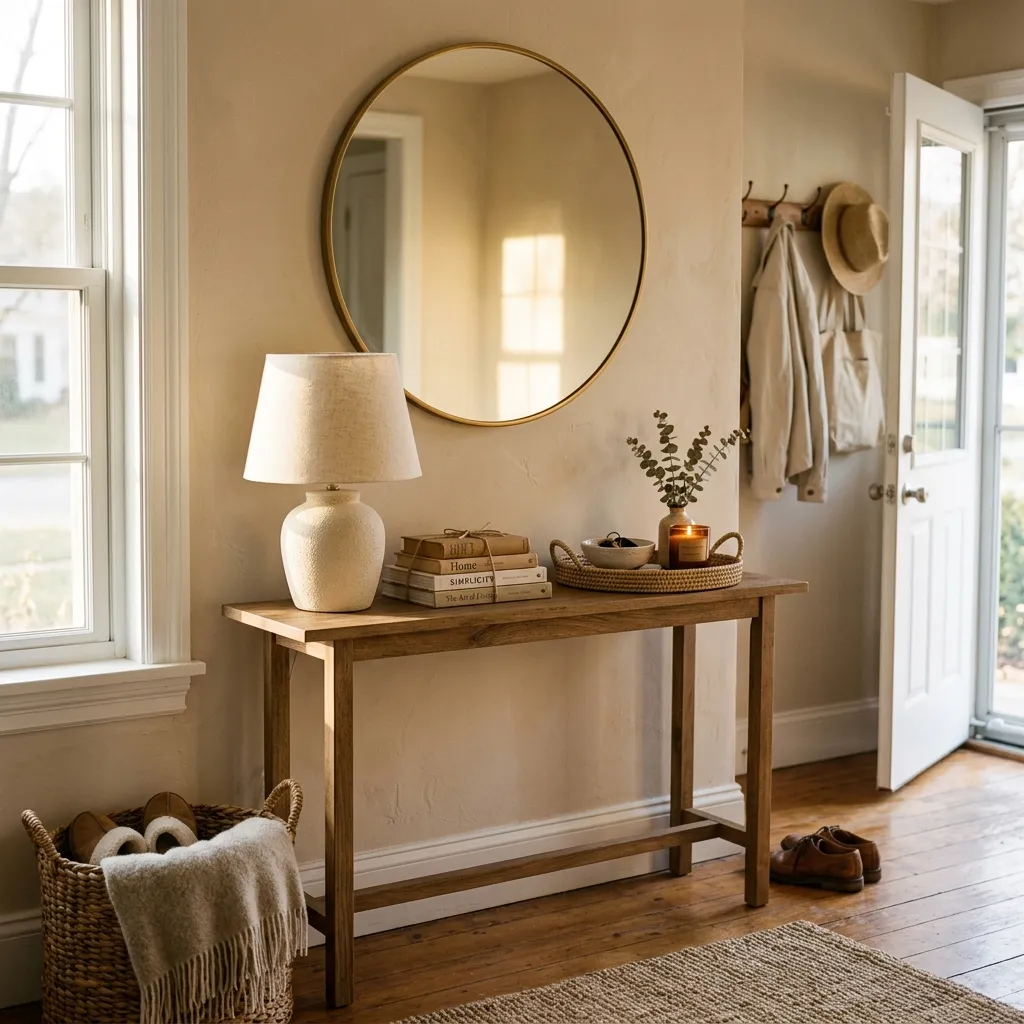
A console table gives your entryway a visual home base. Choose warm wood tones or a matte black finish to ground the space, then keep the top styled with just three to five objects — a lamp, a tray, a small stack of books.
- Works in both large foyers and narrow hallways (choose a slim depth for tight spaces)
- Pairs well with a mirror or art above it for balance
The height and depth of your console table matter just as much as its finish. In a narrow hallway, a table deeper than 12–14 inches can feel like an obstacle rather than a feature, so measure your walkway before you shop. If your entryway sees a lot of daily traffic, look for a table with a drawer or lower shelf so everyday items like sunglasses or a spare charger have a home out of sight, keeping the surface on top clear for styling.
you may also like 21 best Bedroom color scheme ideas
2. Layer a Textured Rug Underfoot
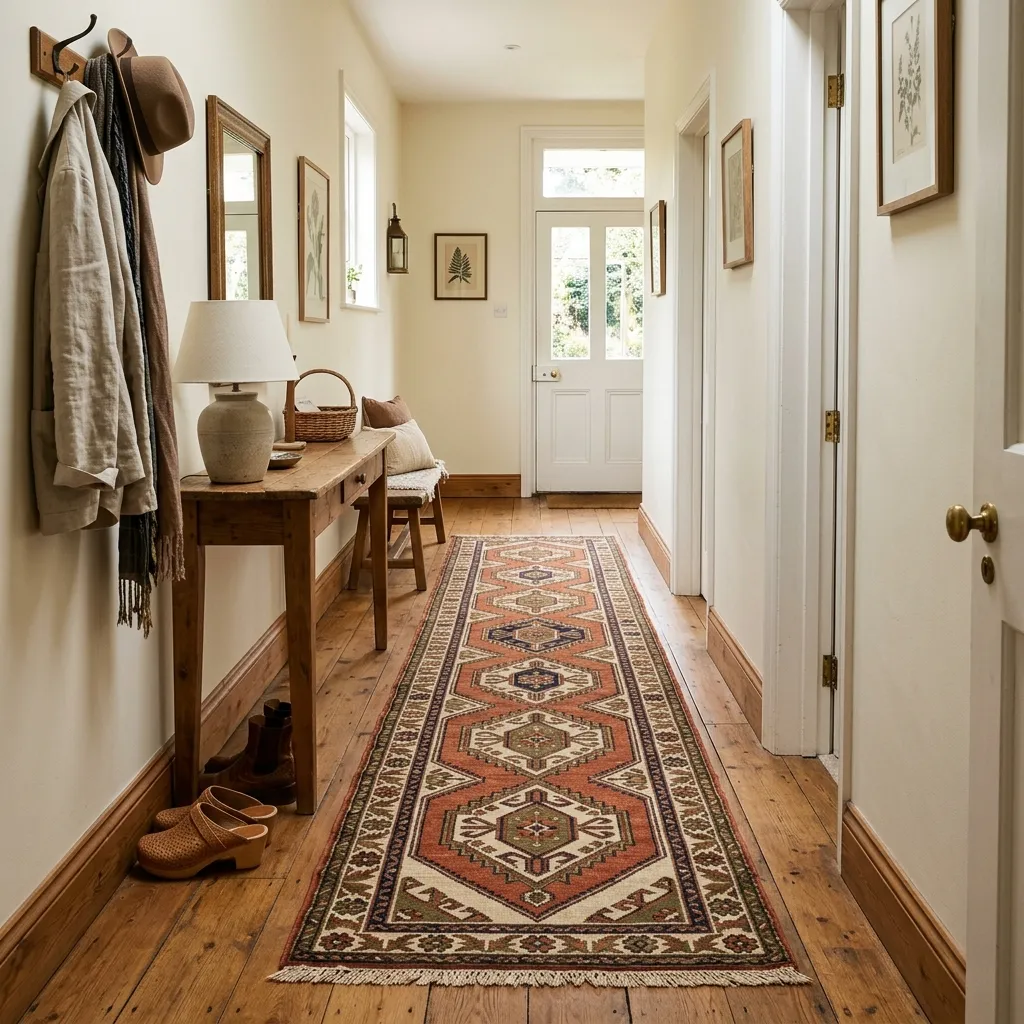
A flat-woven jute or vintage-style rug instantly warms up hard flooring and helps define the entryway as its own zone, especially in open-concept homes where the space might otherwise blend into the living room.
- Look for a durable, low-pile weave that can handle daily foot traffic
- Vintage-inspired patterns hide scuffs better than solid pale colors
Beyond warmth, a rug also helps protect your flooring from the grit and moisture that comes in with everyday shoe traffic. A low-pile flat weave is easiest to keep clean — many can simply be shaken out or vacuumed — while still delivering the texture that makes an entryway feel finished. If you’re layering the rug over hardwood or tile, a thin non-slip pad underneath keeps it from sliding and adds a bit of cushioning underfoot.
3. Install a Statement Mirror
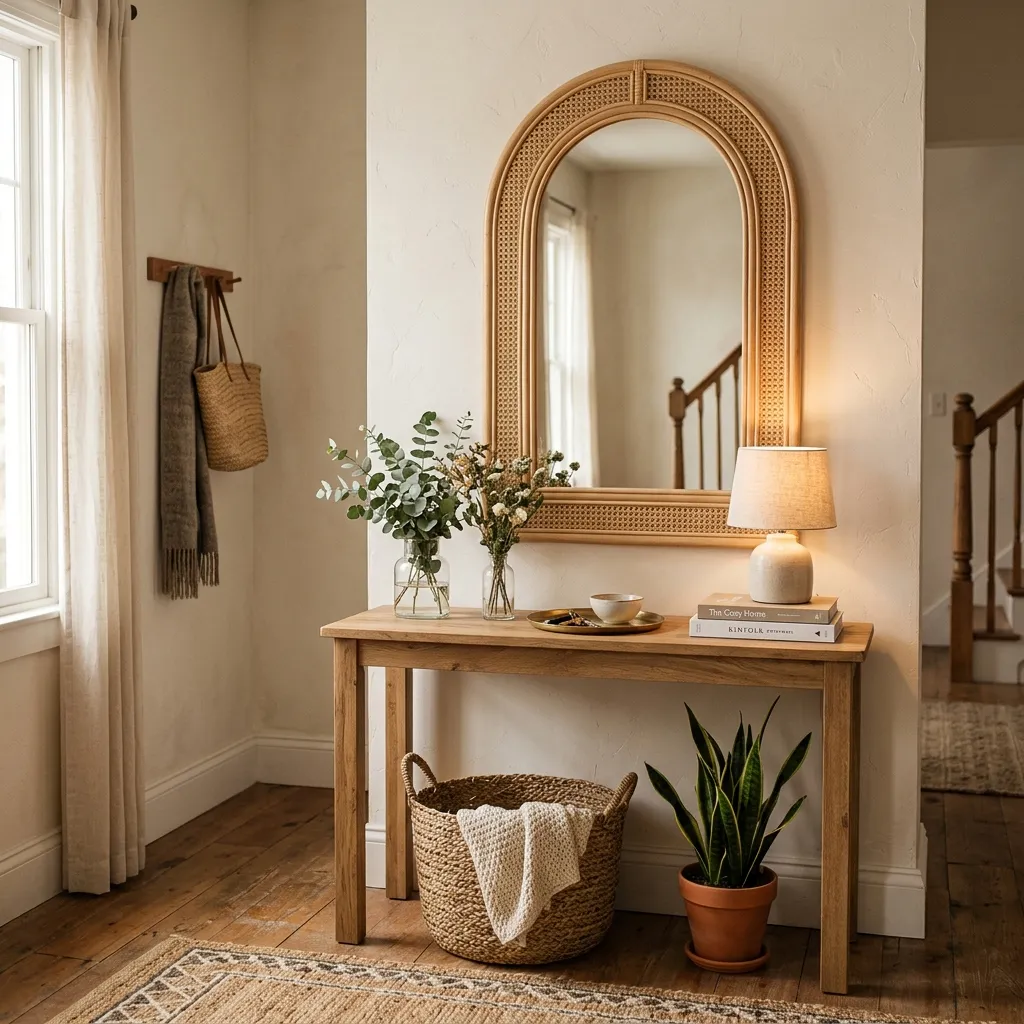
A large round or arched mirror makes a small entryway feel bigger and gives everyone a last-look spot before heading out. Rattan, brass, or fluted wood frames lean into a soft, collected-over-time look.
Positioning matters as much as the mirror itself. Hanging it so it reflects a window or light fixture will bounce natural or warm light back into the space, making even a dim hallway feel brighter. If your entryway doubles as a spot for last-minute outfit checks, choose a mirror sized so it reflects from about chest height upward — that way it’s functional as well as decorative.
4. Add a Bench for Function and Warmth
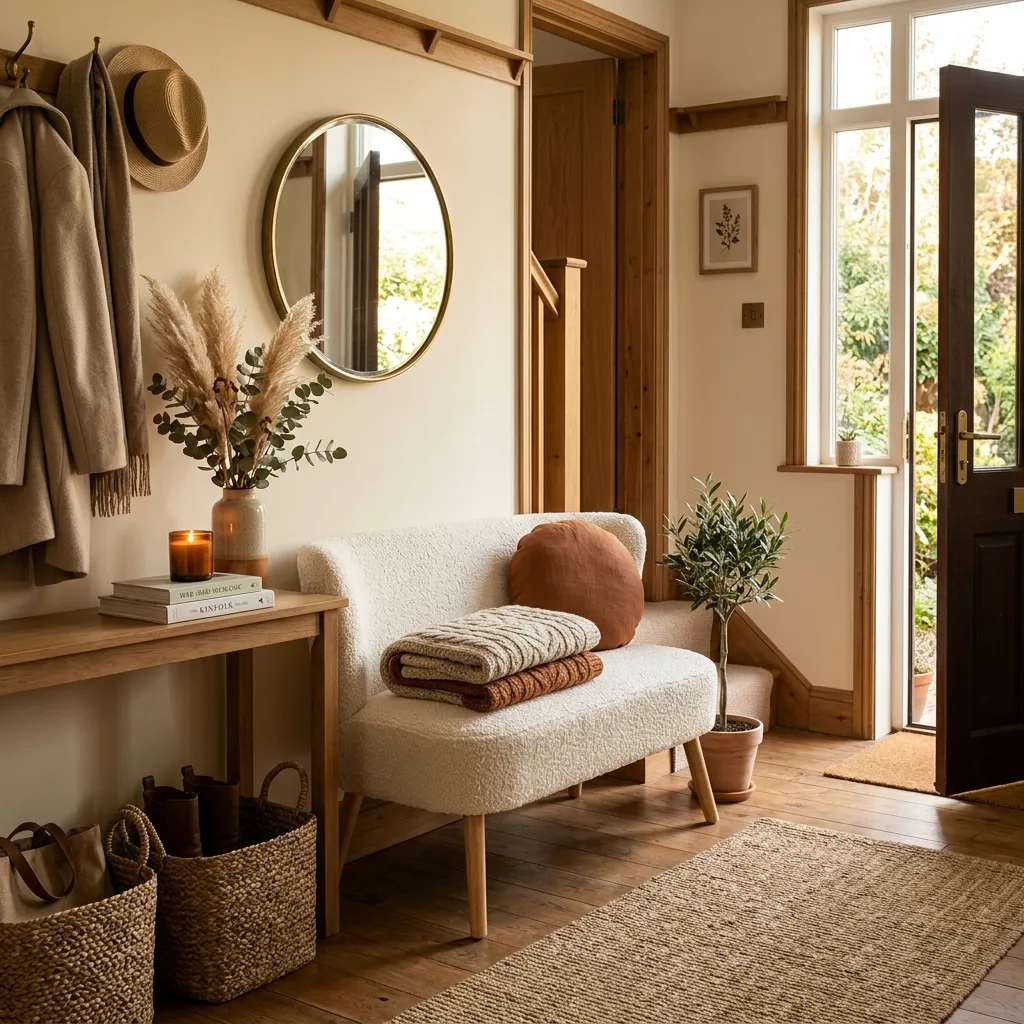
A small bench near the door softens hard angles and gives guests a spot to sit while removing shoes. Upholstered boucle benches add texture, while a wood bench keeps things rustic.
- Choose a bench with a shoe-storage shelf underneath for small entryways
- Add a folded throw blanket on top for extra coziness
A bench earns its keep fastest in households with kids or frequent guests, since it turns the daily shoes-on, shoes-off routine into something easier rather than a balancing act by the door. If floor space is tight, look for a narrow bench in the 30–36 inch range, which fits most entryways without blocking the path to other rooms while still offering a place to sit.
5. Bring in a Statement Light Fixture
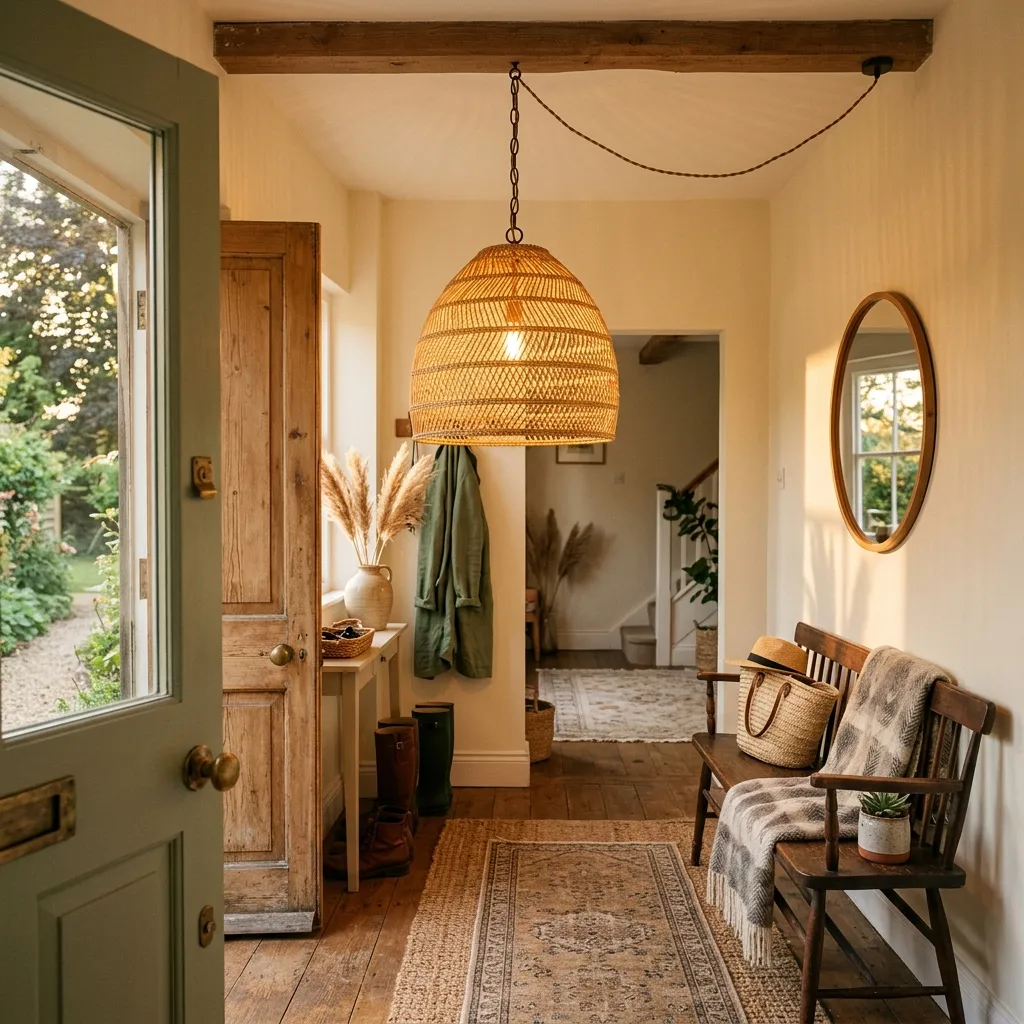
Overhead lighting is often an afterthought in entryways, but a woven pendant or small fluted-glass fixture instantly elevates the space without overwhelming it.
Because entryways are usually compact, this is a low-risk place to try a bolder fixture than you might in a larger room. A warm-toned bulb (around 2700K) will keep the light feeling cozy rather than clinical, which matters since this is often the last light guests see before you turn it off for the night. If your entry doesn’t have a ceiling fixture already wired in, a plug-in pendant kit is an easy workaround that avoids any electrical work.
6. Style an Entryway Gallery Wall
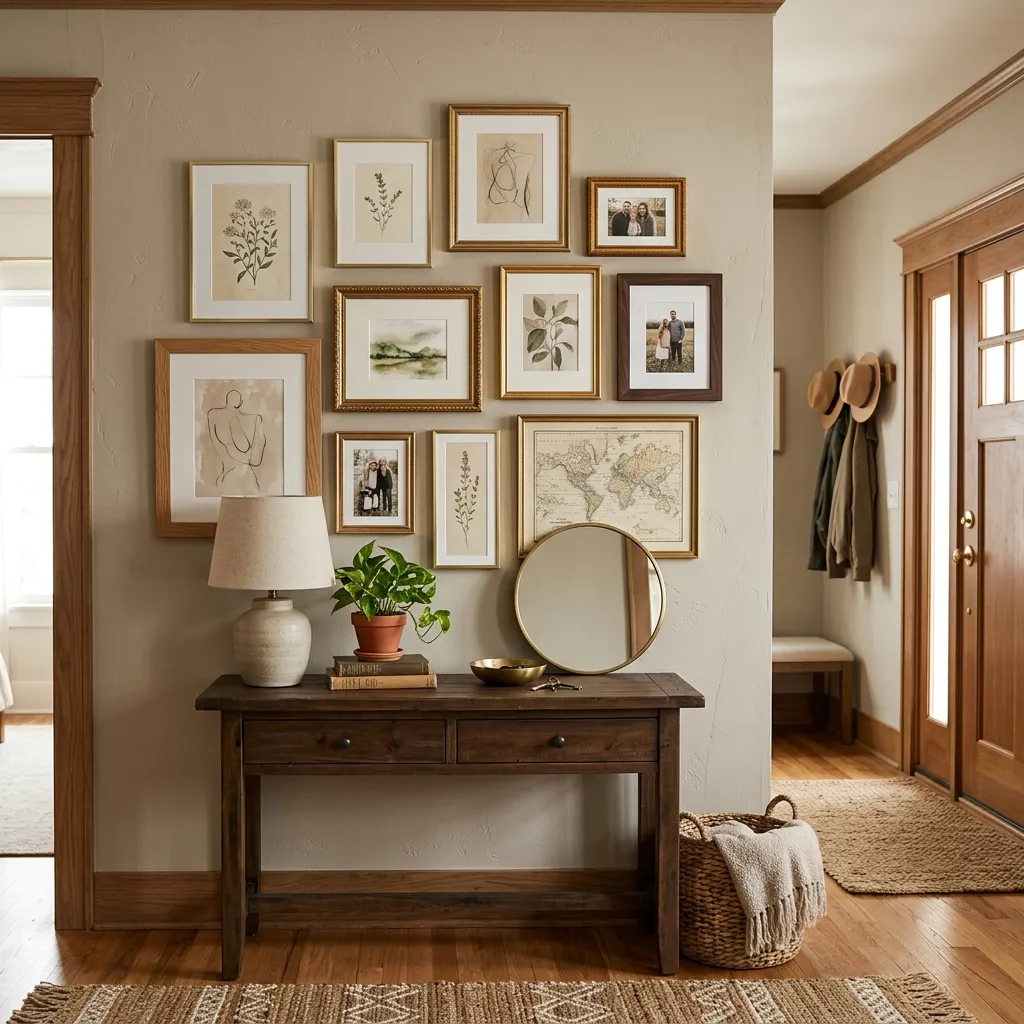
A curated cluster of framed art, mirrors, and small shelves above the console table adds visual interest and makes the space feel intentional rather than accidental.
- Mix frame finishes (brass, black, natural wood) for a collected look
- Keep one larger anchor piece and 2-3 smaller pieces around it
Before hammering anything into the wall, lay the arrangement out on the floor first so you can adjust spacing and balance without patching extra holes. A good rule of thumb is to keep 2–3 inches between frames so the grouping reads as one cohesive piece rather than scattered items. Rotating in a seasonal print or a recent photo keeps the wall feeling current instead of static.
7. Use a Runner Instead of a Rug in Narrow Hallways
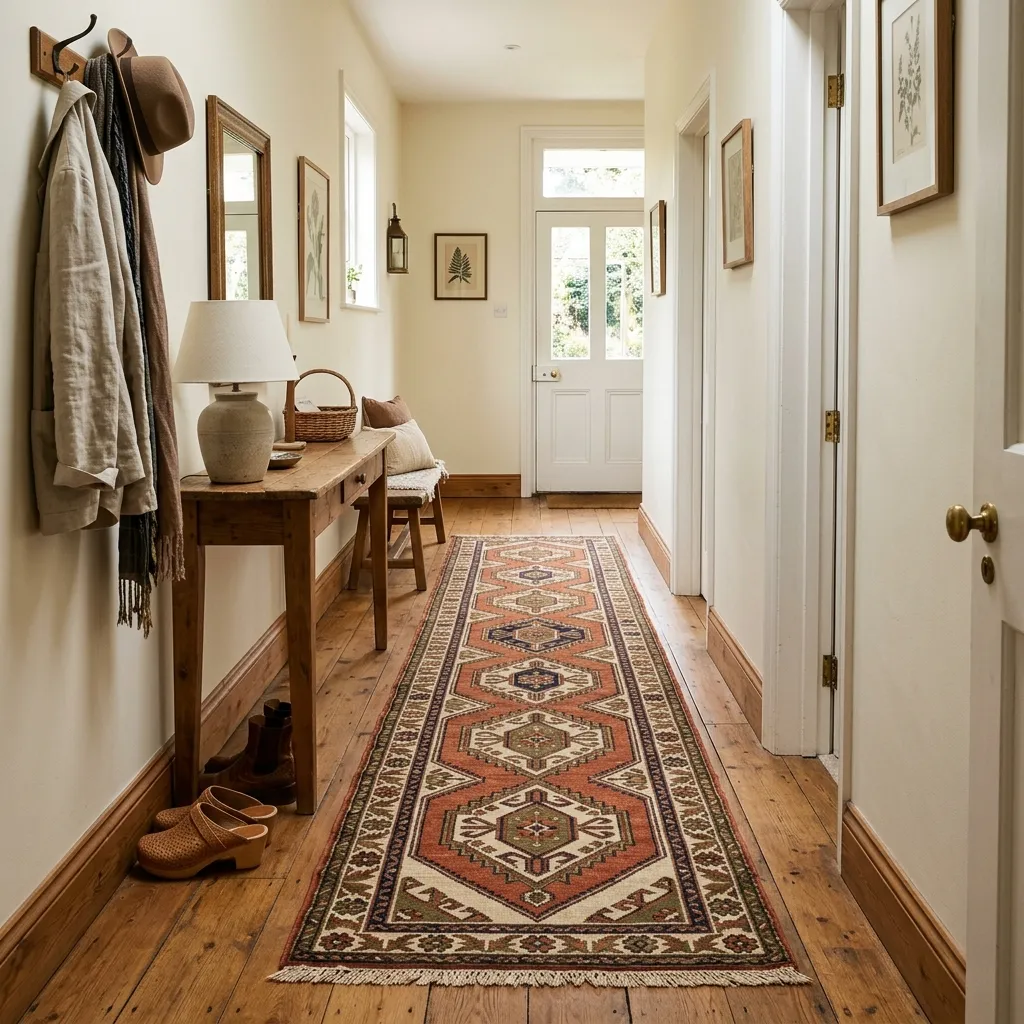
If your entrance is more hallway than foyer, a long runner in a botanical or vintage pattern draws the eye down the space and adds softness without overwhelming a tight footprint.
Measure the full length of your hallway and leave a few inches of bare floor at each end rather than running the rug wall to wall — this small gap makes the space feel intentionally styled rather than simply covered. A patterned runner is also more forgiving with everyday wear than a solid color, since it hides dust and light scuffs between cleanings far better.
8. Incorporate Greenery at Every Height
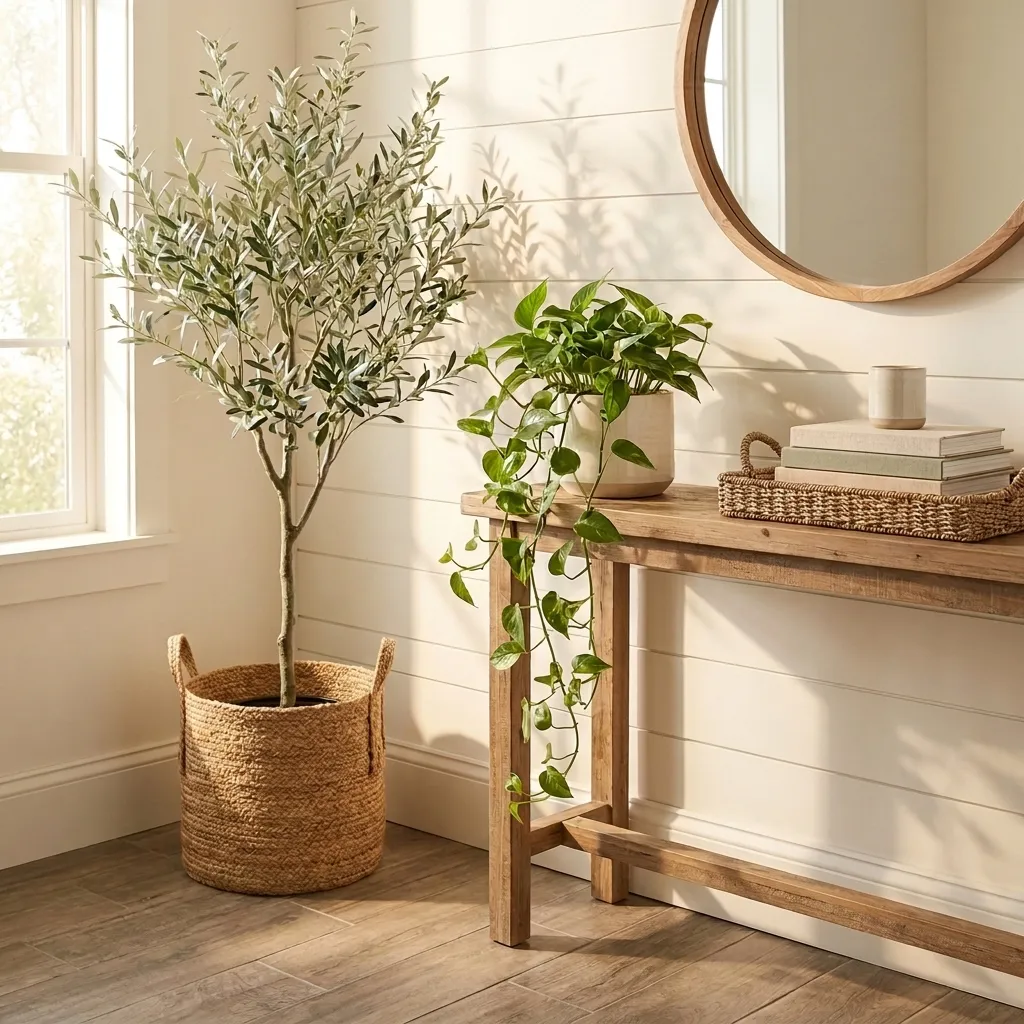
- Faux greenery works well in low-light entryways
- Vary plant height for a layered, natural look
Real plants can struggle in entryways that don’t get much natural light, so it’s worth being honest about your space before investing in a living tree. If your entry sits near a window or gets some indirect daylight, a hardy option like a snake plant or ZZ plant will tolerate the lower light levels far better than something like a fiddle leaf fig, which needs brighter conditions to thrive.
9. Add a Catch-All Tray for Keys and Mail
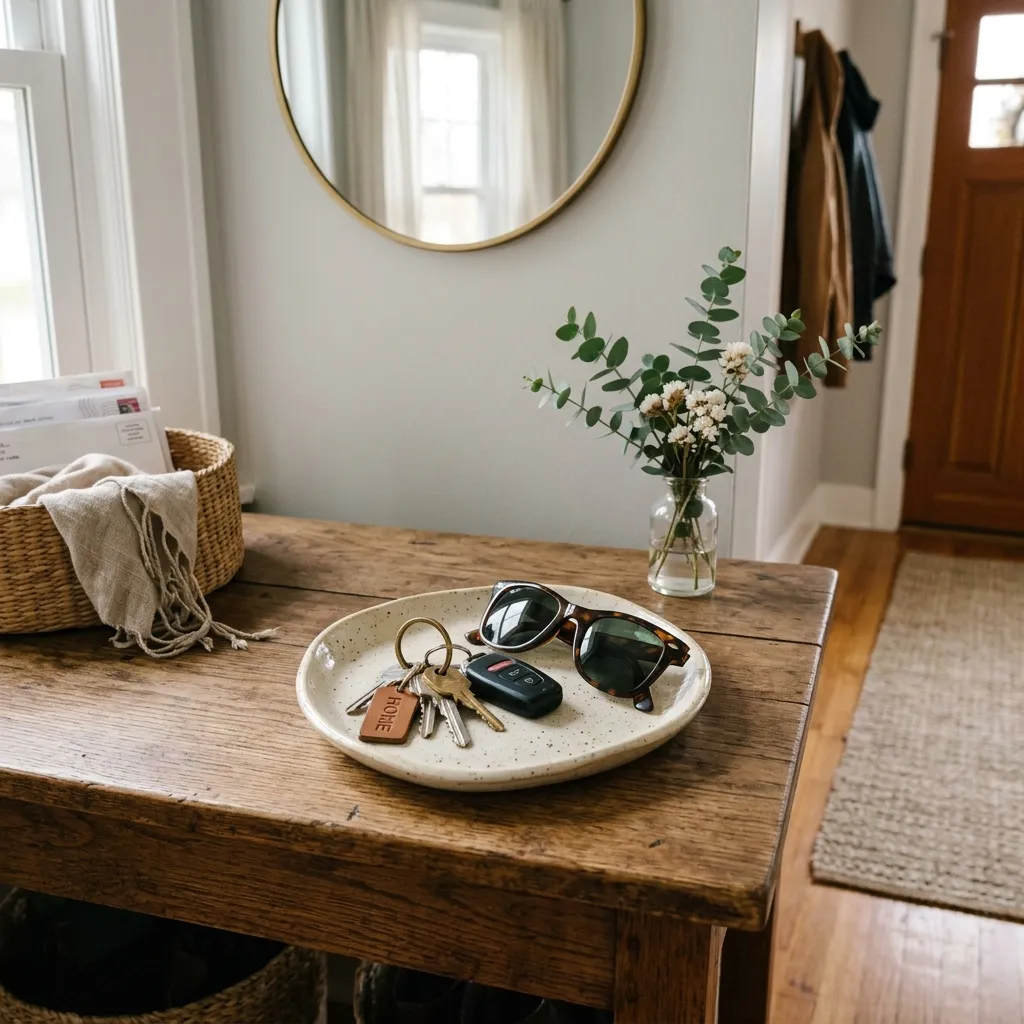
A simple ceramic, wood, or woven tray keeps daily clutter — keys, mail, sunglasses — contained and looking styled instead of scattered.
The trick to keeping a catch-all tray from becoming another clutter pile is choosing one just slightly too small for everything you’d want to toss into it. That built-in constraint forces a quick sort each time you walk in, so only the things you actually need that day end up staying on the tray. Pair it with a small drawer or basket nearby for mail that needs to be dealt with, rather than letting it stack up on the tray itself.
10. Hang Hooks That Double as Decor
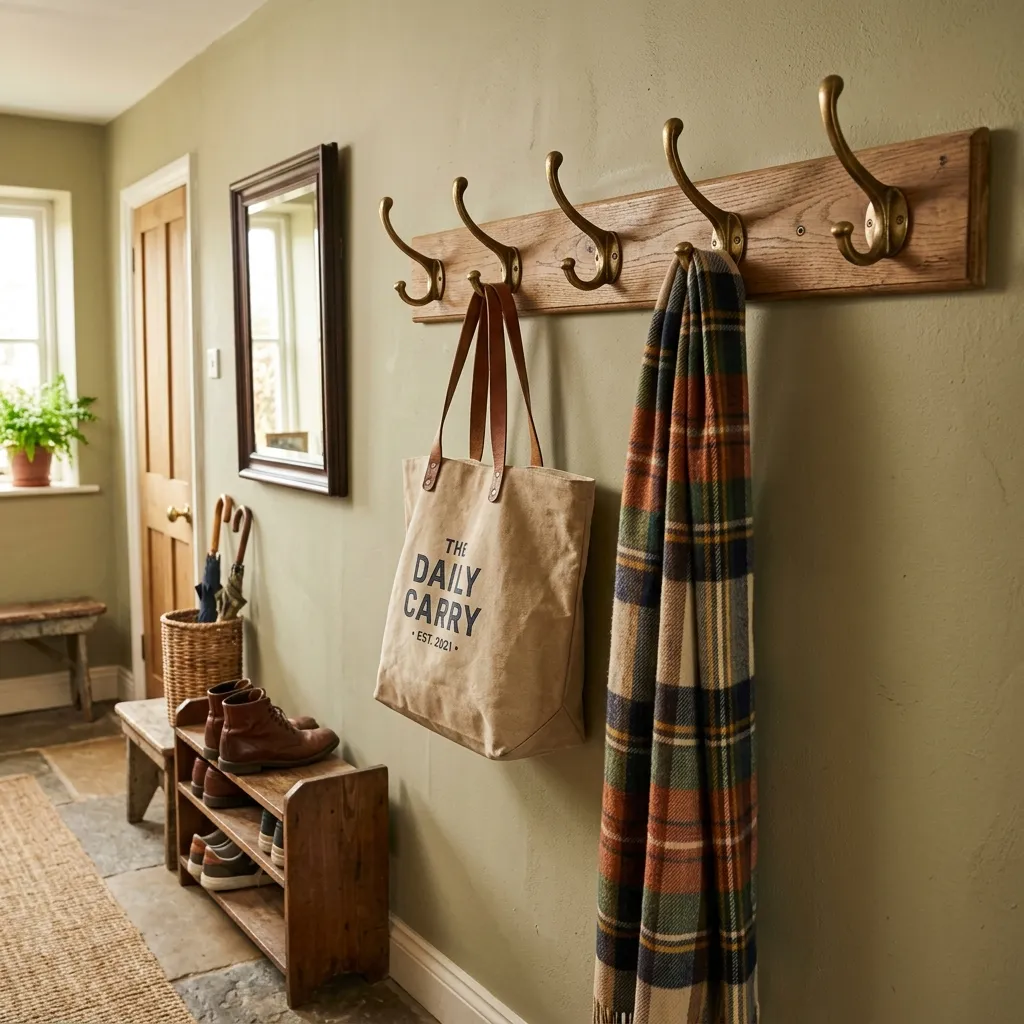
Skip builder-grade hooks and opt for brass, leather, or wood hooks on a decorative rail — functional for coats and bags, and a subtle design detail on blank wall space.
Mount the rail at a height that works for the shortest regular user of your entryway, whether that’s a child or a shorter adult, so the hooks actually get used instead of becoming another spot where coats end up draped over the bench instead. Spacing hooks about 6–8 inches apart gives enough room for bulkier winter coats without bags and jackets crowding each other.
11. Introduce a Scented Welcome
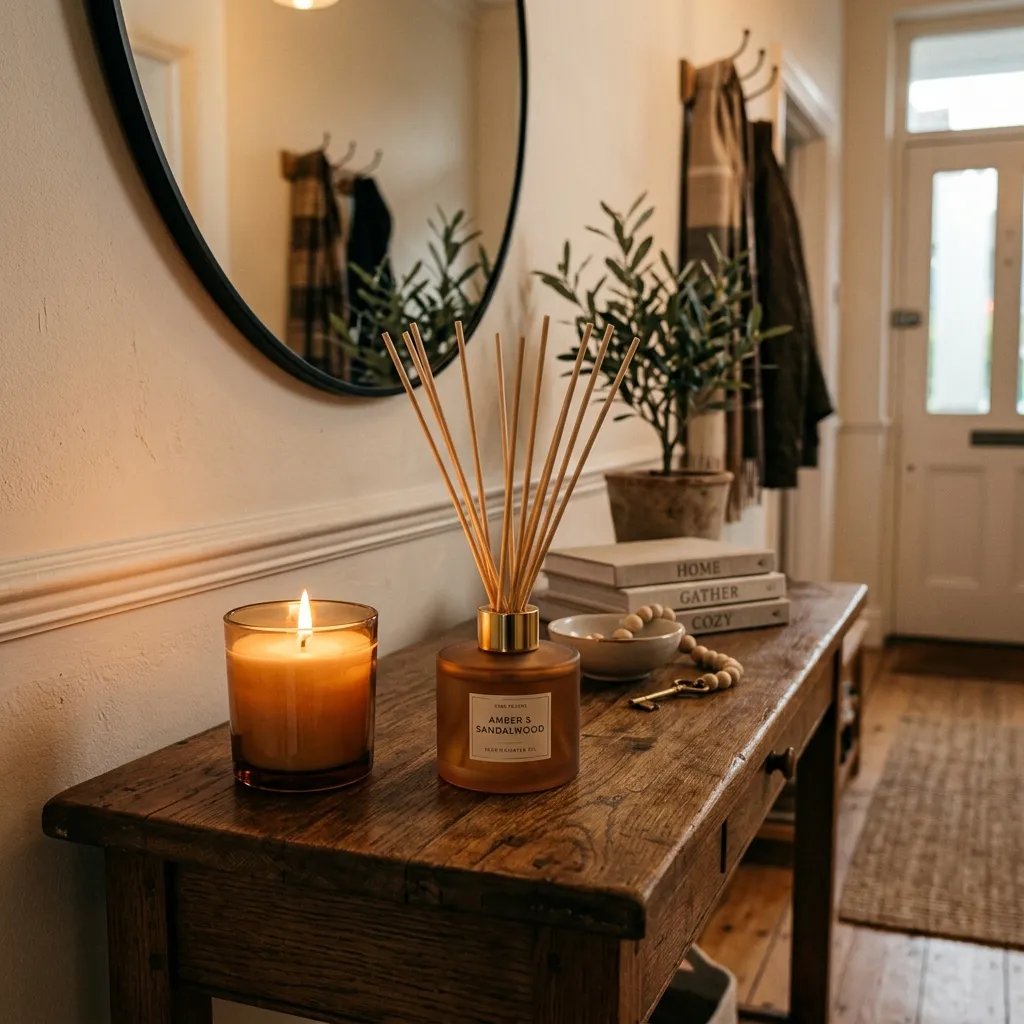
A candle or reed diffuser on the console table engages a sense most entryway decor ignores: smell. Warm notes like amber, cedar, or fig create an inviting first impression the moment the door opens.
Scent is also one of the strongest triggers for memory, so a consistent signature scent in your entryway can become part of how your home feels distinctly like yours to family and guests alike. If you have pets or prefer not to burn candles unattended, a reed diffuser offers the same warm welcome with none of the upkeep, and it’s easy to swap scents seasonally without buying a whole new candle.
12. Layer in a Vintage or Antique Accent Piece
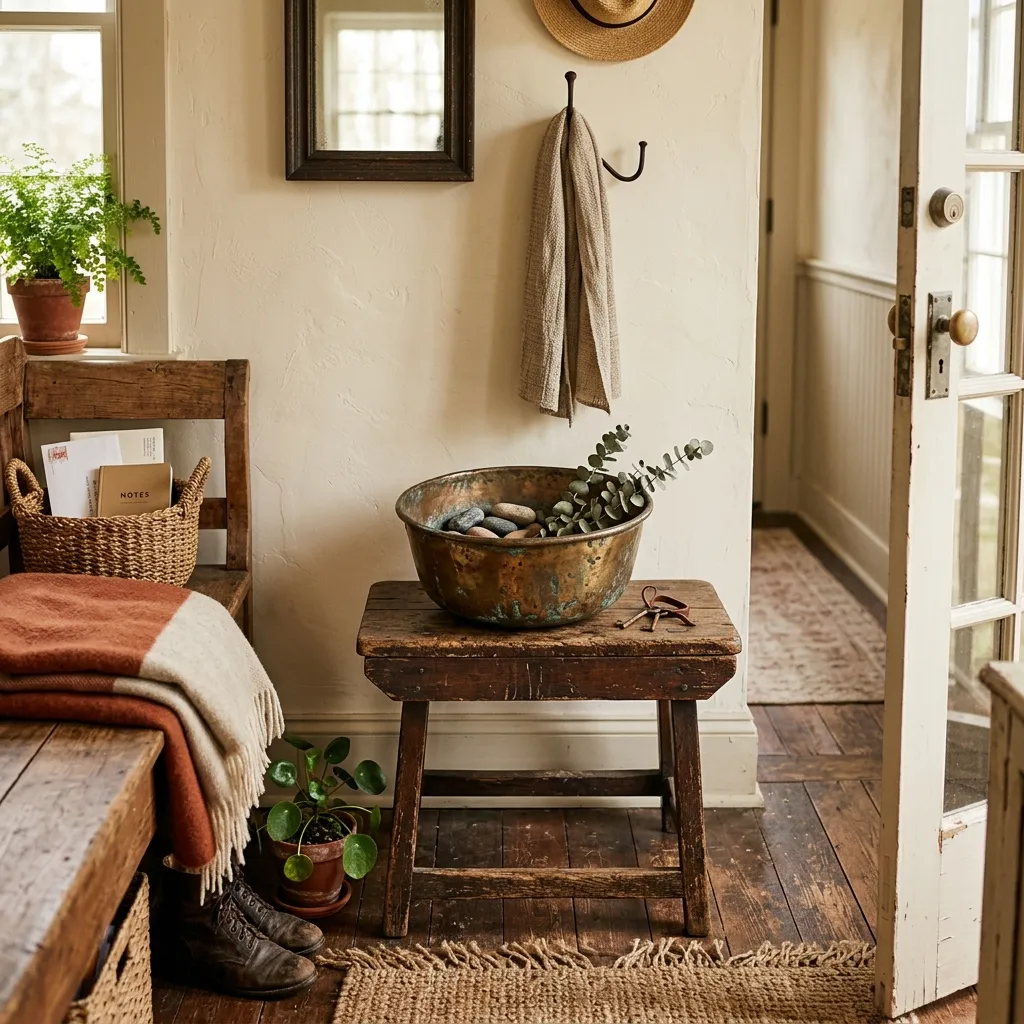
One weathered, one-of-a-kind item — an antique mirror, a vintage stool, an aged brass bowl — gives an entryway soul and keeps it from feeling like a showroom display.
You don’t need a large budget or a trip to a formal antique dealer to find a piece like this — local estate sales, flea markets, and even secondhand marketplaces often turn up unique finds at a fraction of retail price. Look for something with visible age, like a worn patina on brass or a slightly imperfect finish on wood, since that character is exactly what keeps the space from feeling too polished or impersonal.
13. Use Wallpaper to Create Instant Drama
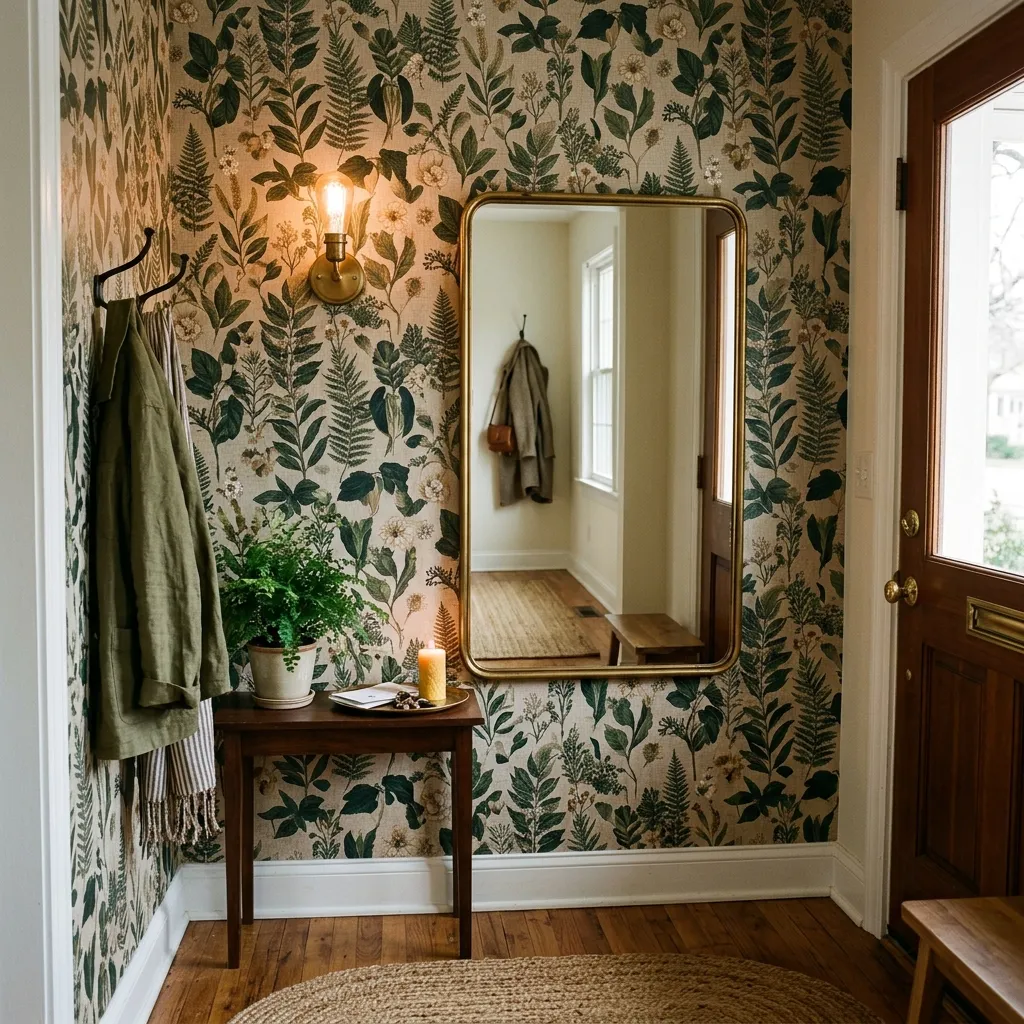
Entryways are small enough to make a bold wallpaper choice feel achievable rather than overwhelming. A textured grasscloth, subtle stripe, or botanical print can transform the space in an afternoon.
- Test a removable wallpaper sample before committing to a full wall
- Pair bold wallpaper with simple, uncluttered furniture
Because most entryways are small, even a premium wallpaper won’t require much material, which makes this one of the highest-impact-per-dollar upgrades on this list. Removable, peel-and-stick options have improved significantly in recent years and are a great way to test a bold pattern without a long-term commitment, especially if you’re renting or simply unsure about full commitment to a print.
14. Add a Woven Basket for Shoe Storage
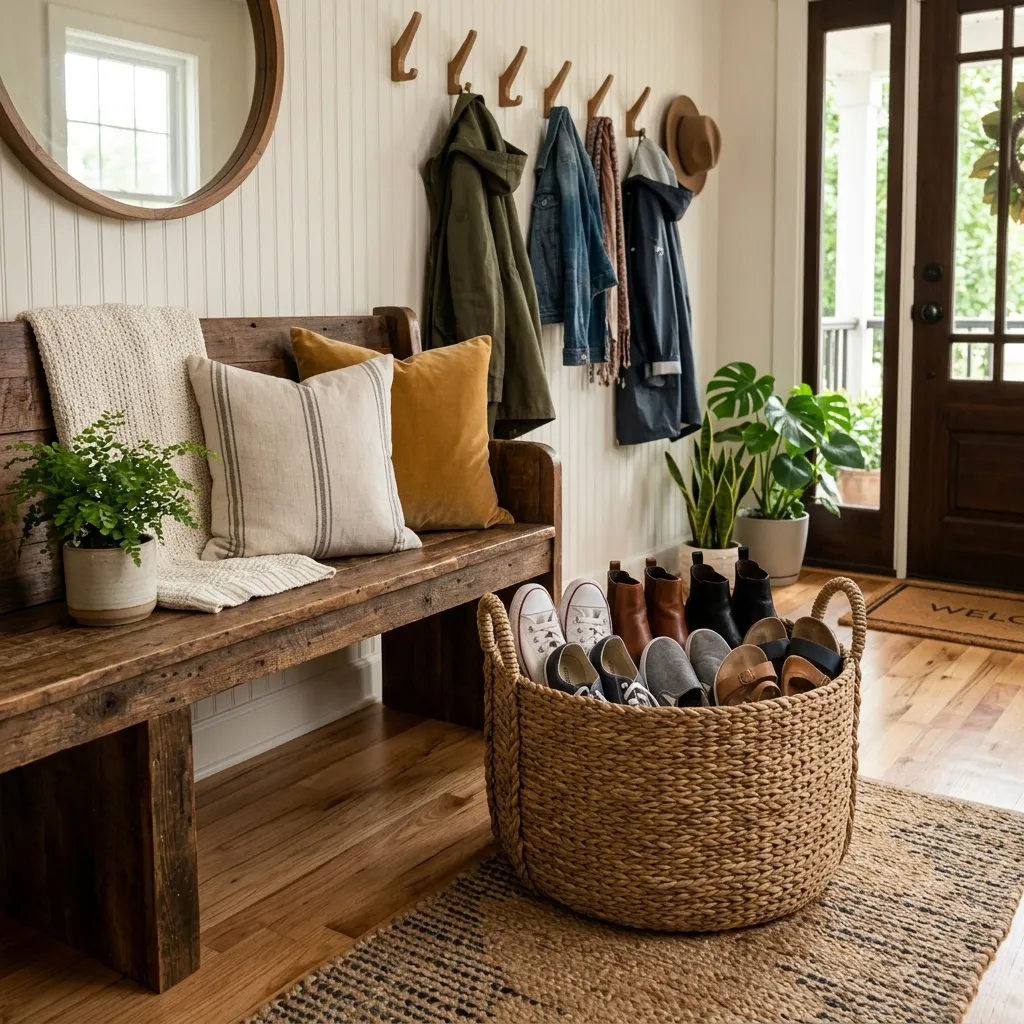
A large woven basket tucked beside the console table or bench offers a stylish, low-effort solution for corralling shoes without needing a mudroom cabinet.
Choose a basket with a wide enough opening that shoes can be tossed in without careful stacking, since the easier the system is to use, the more likely everyone in the household will actually stick to it. If your entryway sees several pairs of shoes a day, consider two smaller baskets — one for everyday shoes and one for out-of-season or occasional pairs — rather than one basket that quickly overflows.
15. Frame the Door With Symmetry
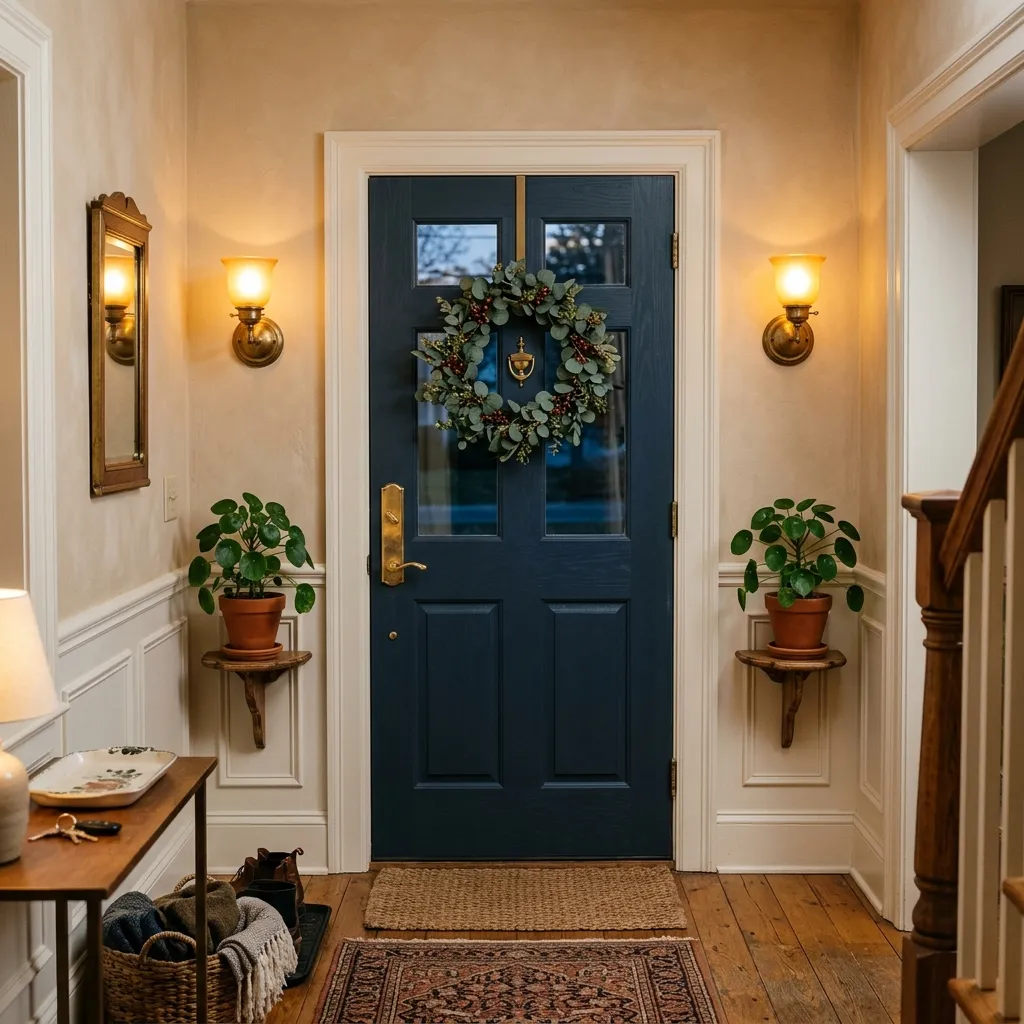
Flanking your front door (interior side) with matching sconces, plants, or small stools creates a sense of balance and calm the moment someone steps inside.
Symmetry works because it signals order to the eye almost instantly, which is especially useful in an entryway that might otherwise feel chaotic during busy mornings. Even if your space isn’t perfectly symmetrical in layout, matching just one pair of elements — two sconces, two small plants — is enough to create that sense of calm without requiring a full architectural overhaul.
16. Display a Seasonal Accent
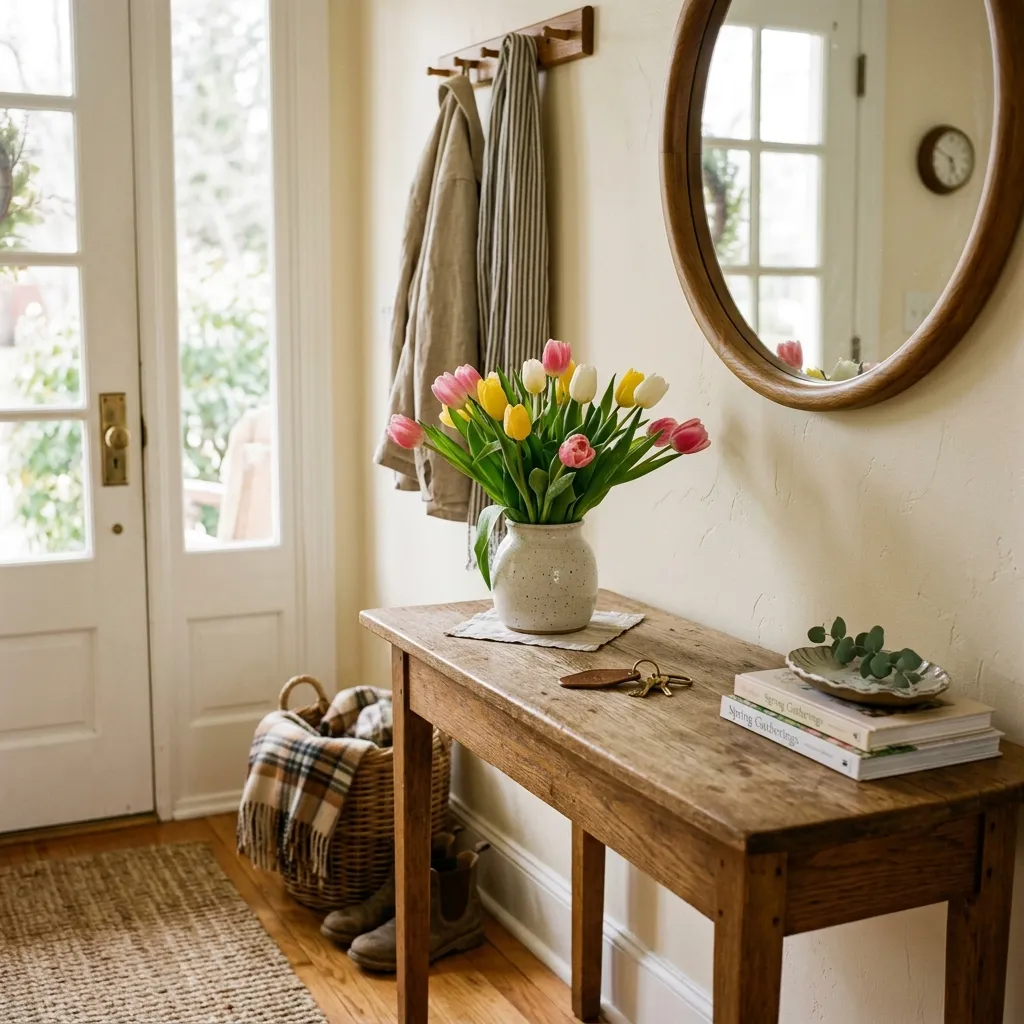
Rotate a small seasonal touch — a bowl of pinecones in winter, a vase of tulips in spring — on the console table to keep the entryway feeling fresh throughout the year.
This is one of the lowest-cost, lowest-effort ideas on this list, and also one of the easiest to keep up with since it only requires swapping one or two small items every few months. Keeping a small box of seasonal accents on hand — a few dried branches, a small pumpkin, a strand of simple lights — means you can refresh the entryway in minutes without having to shop each time the season changes.
17. Personalize With a Monogram or Meaningful Object
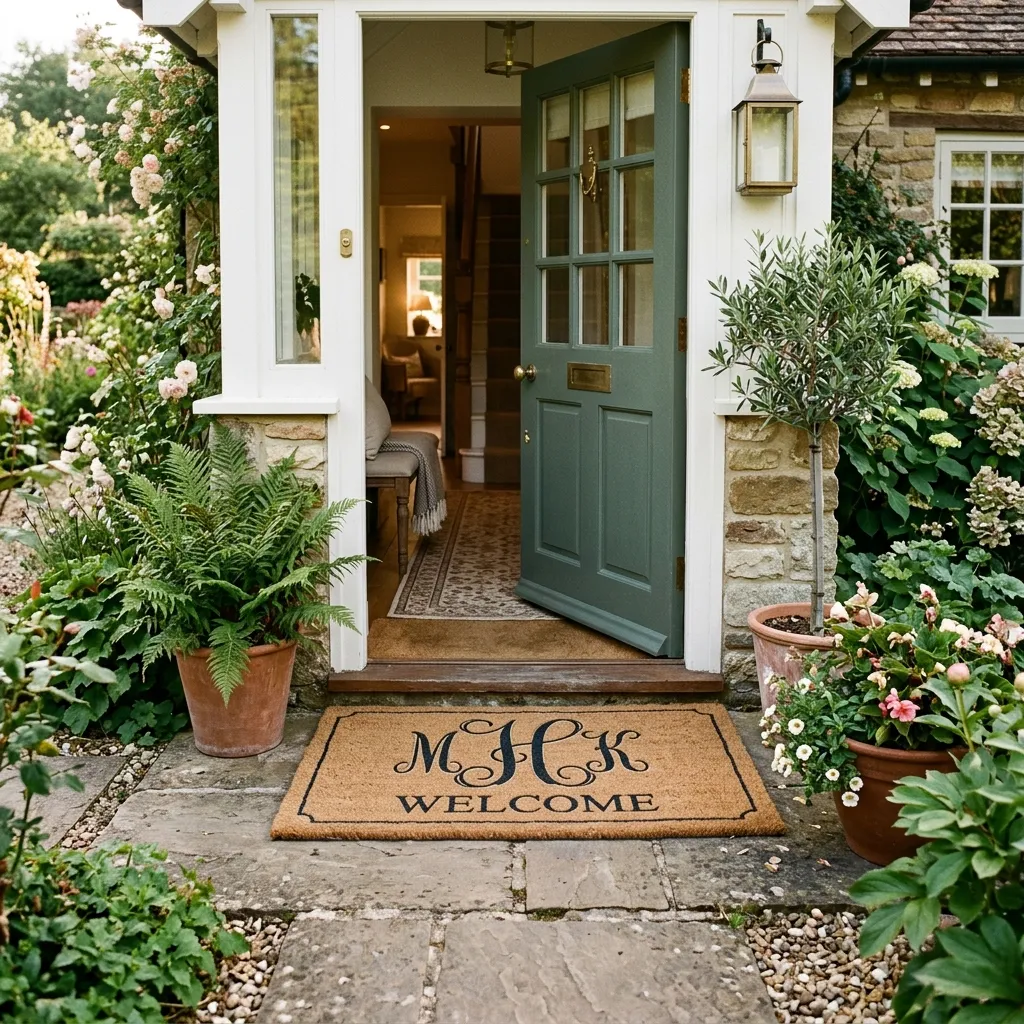
A monogrammed doormat, a family photo, or a piece of art that means something to you turns a beautifully styled entrance into one that feels authentically like home.
This is the detail that separates a showroom-perfect entryway from one that actually feels like yours. A single meaningful object — a photo from a memorable trip, a piece made by a family member, a doormat with your last initial — does more to make an entrance feel personal than any trend-driven purchase, and it’s the detail most likely to make guests smile on their way in.
Final Thoughts
You don’t need to overhaul your entryway all at once. In my own experience refreshing entryways for clients and in my own home, the spaces that feel the most welcoming are rarely the most expensive — they’re the ones with a clear sense of what belongs and what doesn’t. Start with one or two ideas from this list — a textured rug, a statement mirror, a tray to catch the clutter — and build from there.
Which of these home entrance decor ideas are you trying first? Save this post to Pinterest so you can come back to it when you’re ready to refresh your space.
explore more decor ideas